
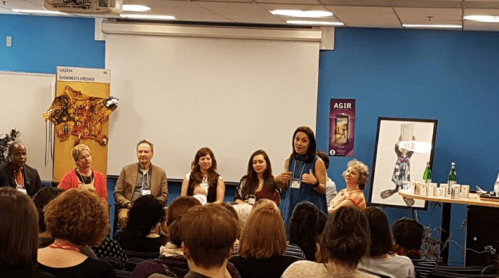
 On May 5th 2018, I presented my art therapy research alongside a panel of creative arts therapist to promote overall wellness. My arts-based heuristic inquiry adopted an Indigenous research paradigm to explore acculturation, identity and art material interaction through the use of Mohawk First media, western art materials and the Expressive Therapies Continuum Assessment (Hinz, 2009). Through Moustakas’ six-step inquiry (1990), Hervey’s three stages of arts-based research (2000) and Wilson’s concept of land as measurement (2008), I examined my own material interaction with both western media and culturally specified Mohawk First Nation’s media as a First Nations person over a 28-day lunar cycle, noting emotional, cognitive and other stimulated areas of functioning during the process (Kapitan, 2010). The images were examined using the ETC Use and Therapist Self-Rating Scale (Hinz, Riccardi Gotshall, & Nan, 2017) as well as image reflection through Witness Writings (Allen, 1995).
The purpose of the research was to explore how material interaction could form an assessment process of acculturative identity for First Nations populations. The findings of this research indicated that access to both Western and First Nations media within an art therapy setting can help to foster a bicultural identity status, which has been linked to wellness for Indigenous populations (Kvernmo & Heyedahl, 2002; Watson, 2009).
To read my research, please click on the following link: https://spectrum.library.concordia.ca/983681/




 Megan Kanerahtenha:wi Whyte