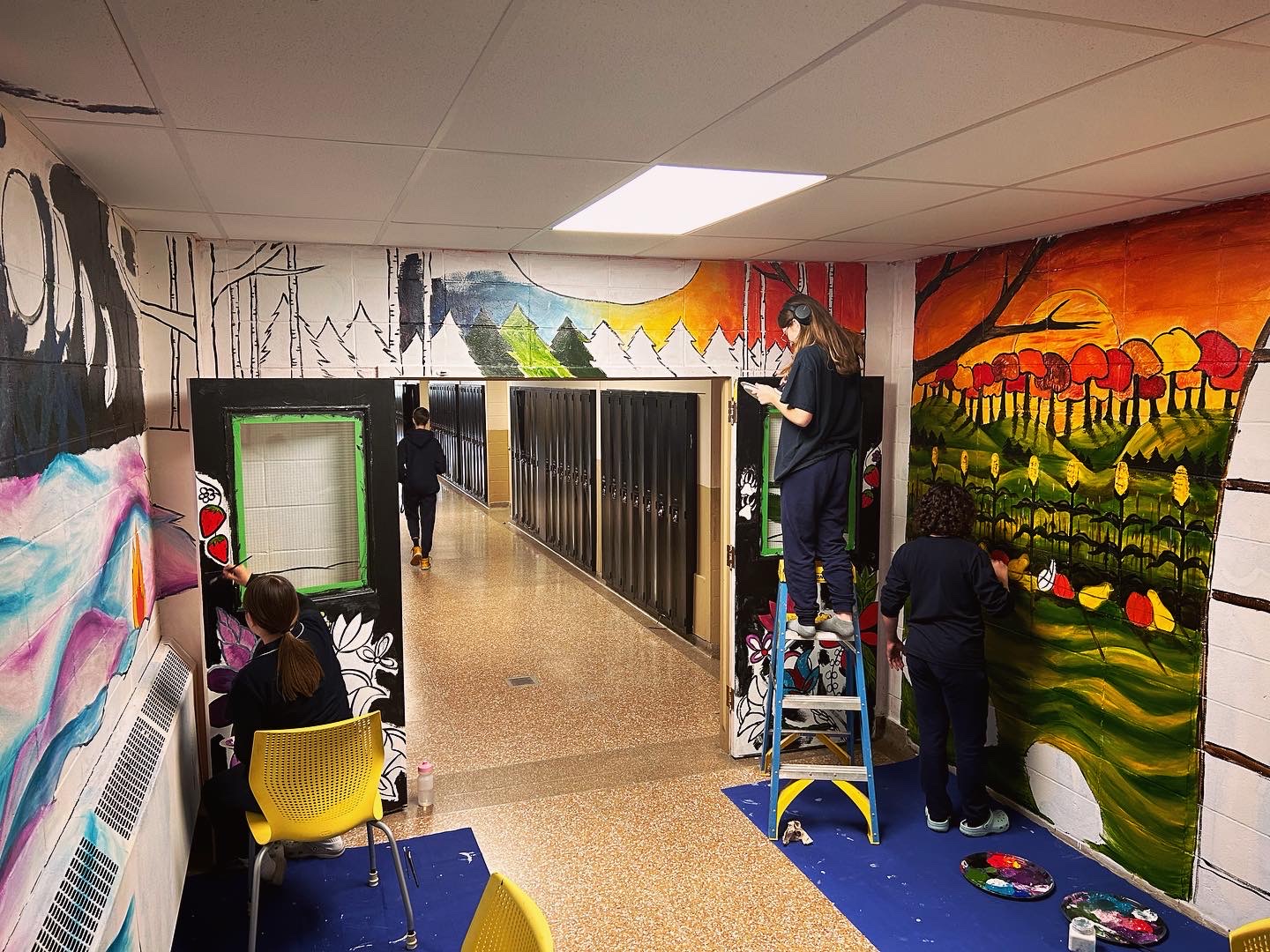
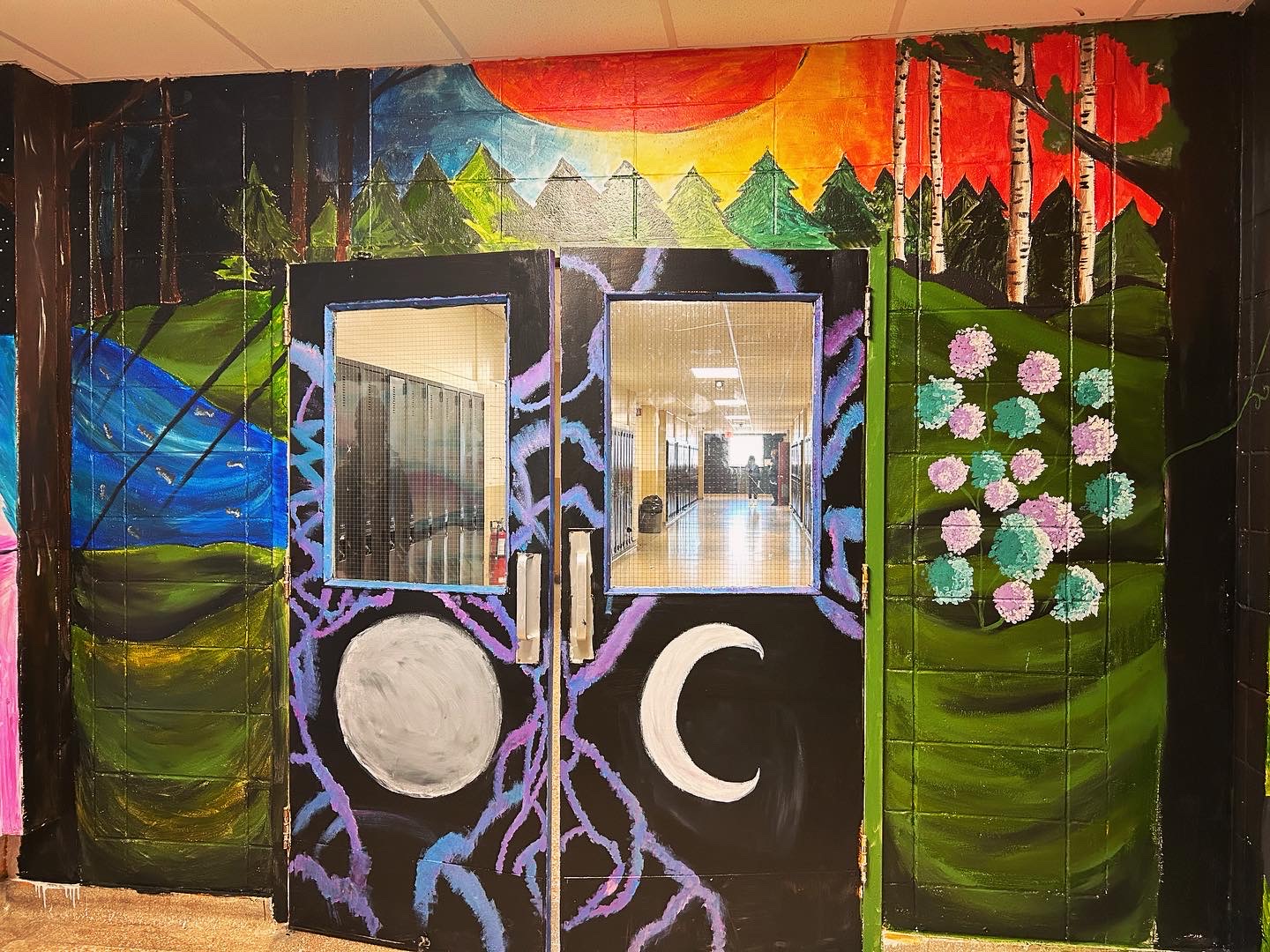
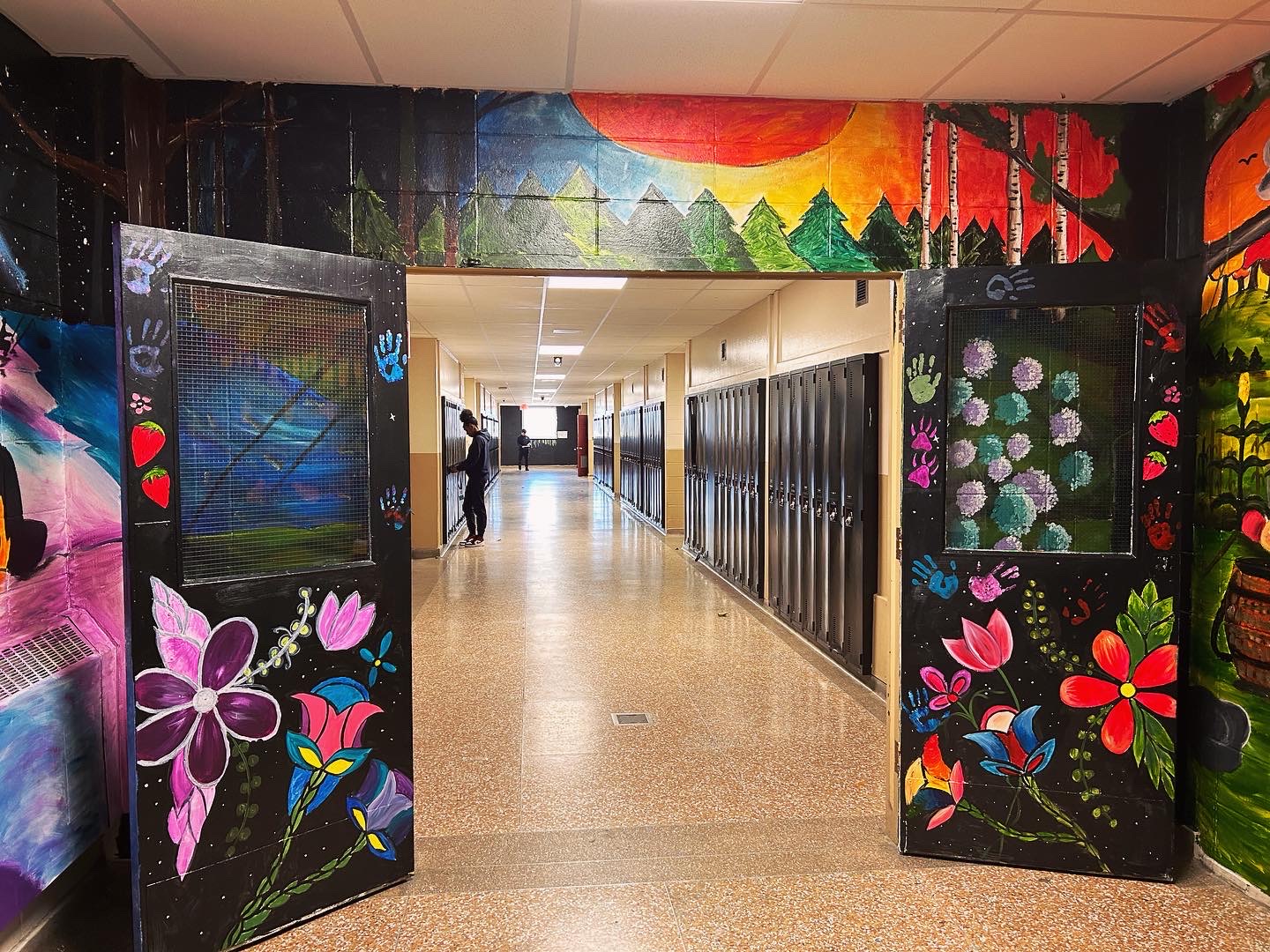
During the fall of 2023, I was invited to create a mural space for the Indigenous students at a local high school. The intention was to bring to life an invitation for Indigenous students to connect at the entrance point of the allocated space. Through conversation, students provided ideas and inspiration for what’s important to them. Representation from different nations was established, with specific teachings along the seasons integrated. Over the span of a few weeks, students were invited to connect and co-create with me. Providing a safe space to allow this mural to unfold, students were empowered to step out of their comfort zone, try new things and share some of their lived experience with myself as the art therapist. I am so proud of all of them!
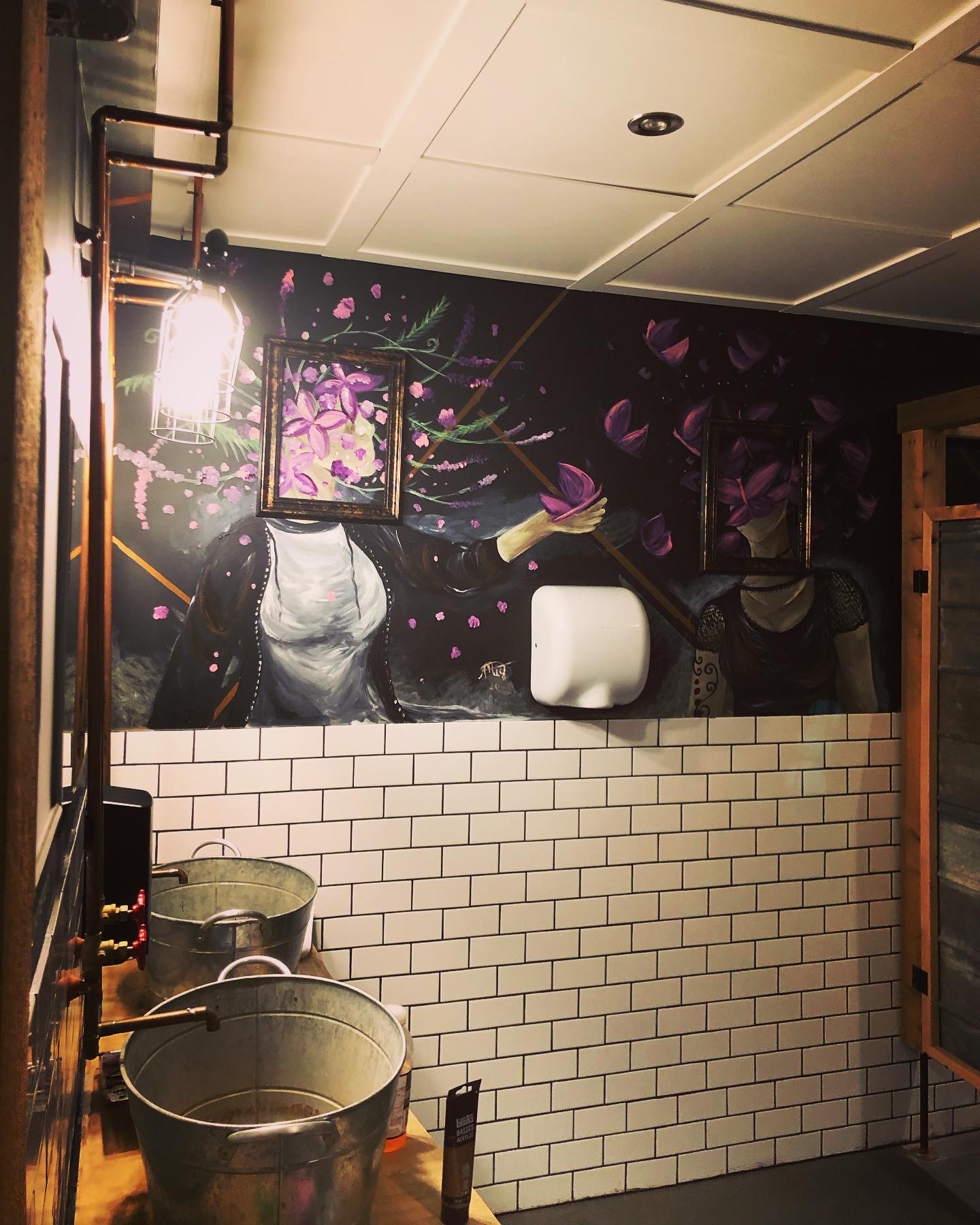
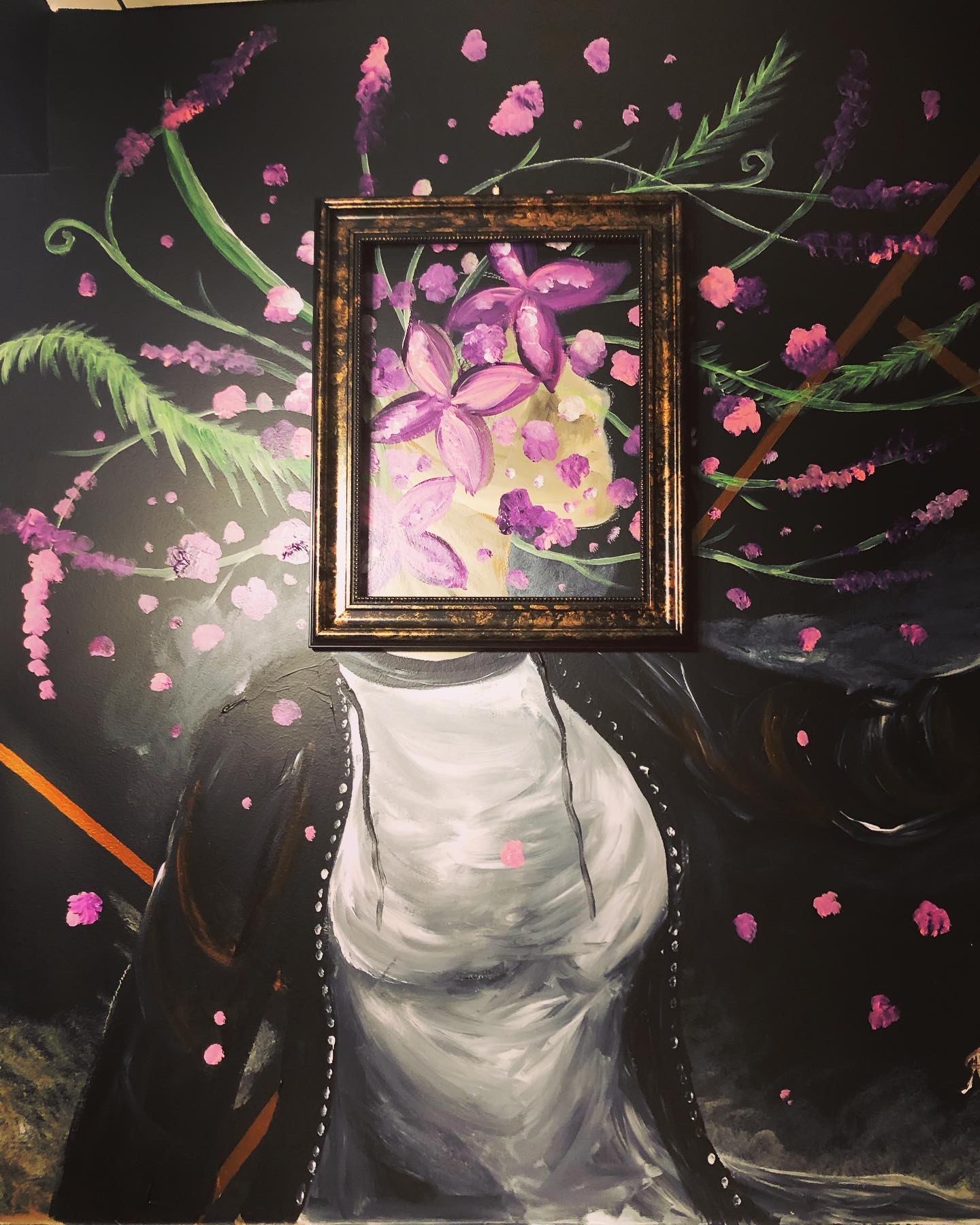
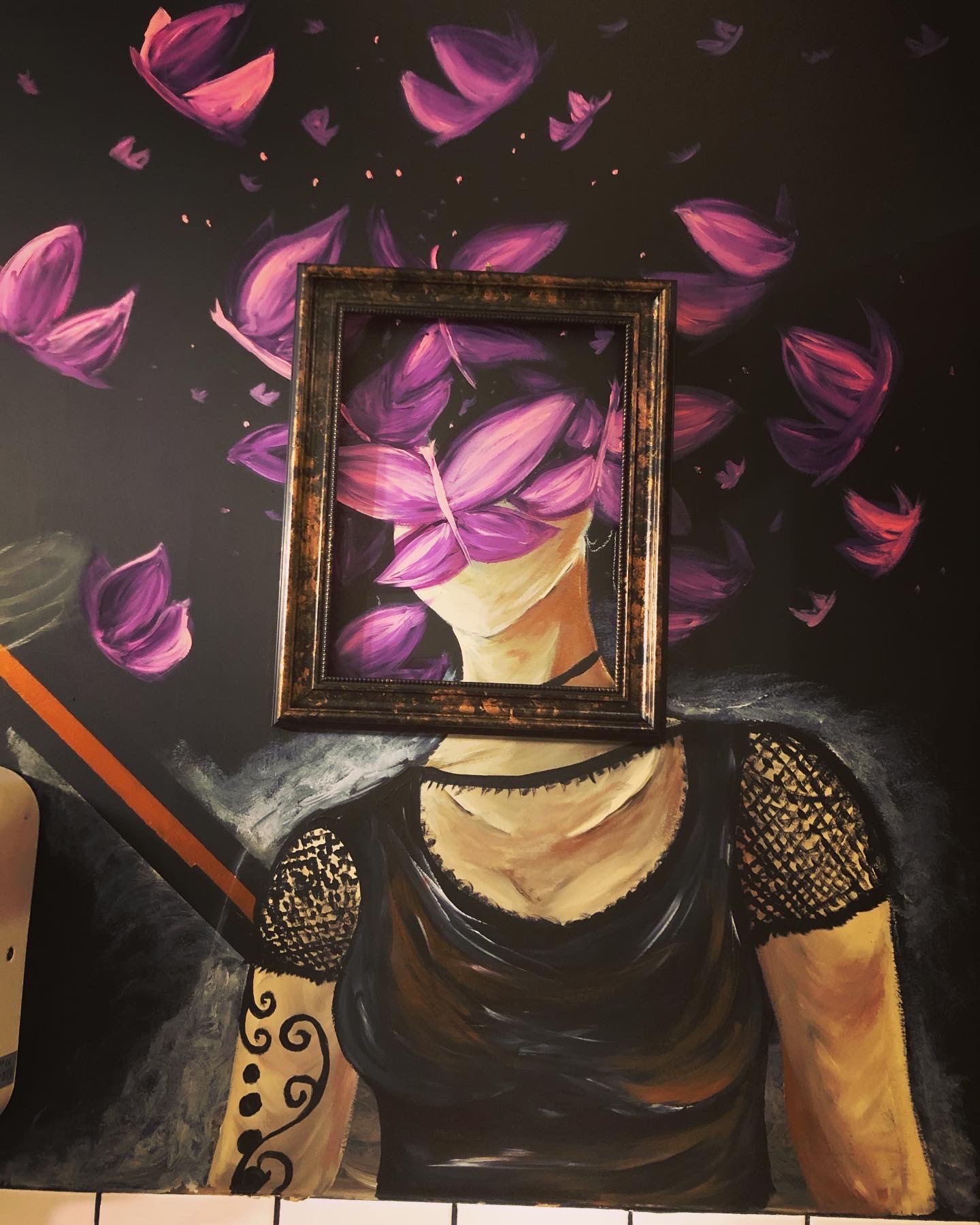
In November 2022, I was invited to produce a mural for the Women’s Restroom at the Kahnawake Brewing Company. The intention was to create a space that not only complemented the aesthetic and identity of the brewery, but honoured the feeling femininity. Femininity, as a social construct, can involve many layers of reflection. From gender constructs, to feminism, to images we personally feel drawn to, the idea of capturing femininity. seemed more complex than simply beautifying a bathroom space.
I wanted to honour the diversity of what it means to be a woman and how we came to identify as such. This mural thus featured a series of portraits with minds bursting with herbs, medicines and butterflies. I drew from my own curiosity of natural medicines and magic of our long traditions of connecting with the land. Each woman and each life entity, being connected to the Earth, features a story of interconnection. The butterflies pollinate the medicines, who then care for the people. As a symbol, this speaks to the importance of women honouring and empowering each other–that we can nourish each other so our whole community can flourish with inspiration, healing and magic entirely of our own.
Using recycled photoframes I hand painted in bronze, each portrait was then framed so that viewers of this mural can find a piece of themselves to honor and love.
How did I come to connect with the Brewery?
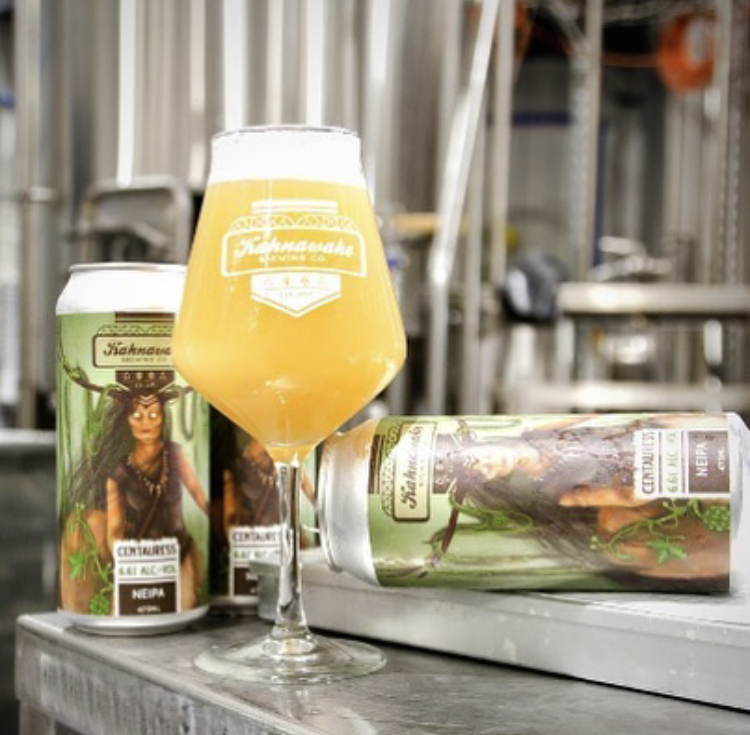
In October 2021, I designed a brew label for them! If you happen to visit, check out the New England IPA entitled “Centauress”!
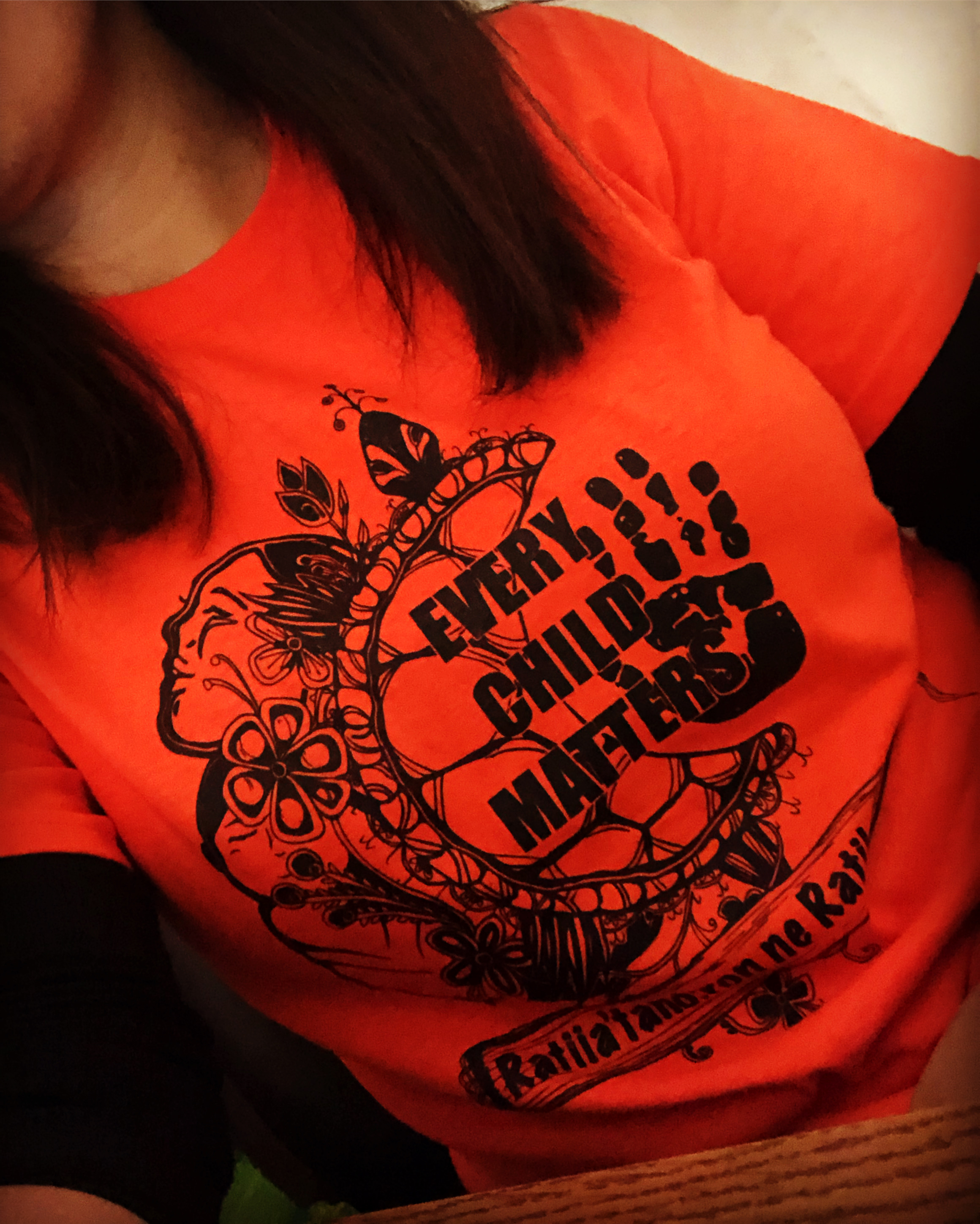
This year, I designed the Kahnawake Education Center’s Orange shirts for the National Day of Truth and Reconciliation on September 30th 2022. Although the process started like many other drawings, there was something that shifted along the way. As I thought about symbols and stories staring down at my blank surface, many things passed through my mind.
I thought about what it would feel like to be taken from home.
I thought about what it would feel like if I was unable to see the children in my life as a parent ever again.
I thought about what it would feel like to come home and feeling like a stranger in my own body.
I thought about my grandfather, who if he hadn’t come home from Residential School that I would not exist and nor would my family.
And for a moment, in the midst of feeling everything that comes with our shared trauma, I felt a moment of gratitude.
I thought about all our children wearing this image and how beautiful they are. All of them who are here because of the love and strength in our community. I knew that it was important to weave intention and ceremony into the image that was to unfold.
In this image, we have turtle island as the foundation for all of our unwavering roots to remind us that home is connected to the soil under our feet.
We have our tota moon to remind us that no matter how alone we can feel, both as children and each of us as children at heart, she is always there to guide us through change.
We have Sky Woman, Mother Earth or truly the idea of any parent figure in our lives, holding what seeds and intentions we plan to birth, grow and sow.
Wrapping us together are flowers and other details, reminding us that no matter the environment, as a community we can find space to thrive and blossom.
At the bottom, we have a wumpum to remind our neighbours to their commitment to becoming or continuing as allies.
And the center, we have the handprint for both the children who did not come home and for those that did to remind them that we love them each so dearly.
Maybe it’s just a shirt, but for me it’s medicine and we may not always realize it.
Every child matters reminds us of the importance to make safe spaces for children to grow, to change as they change, to blossom and to feel loved. That’s our collective role as a community and when we wear orange, we validate that commitment to our children so that they never feel unrooted.
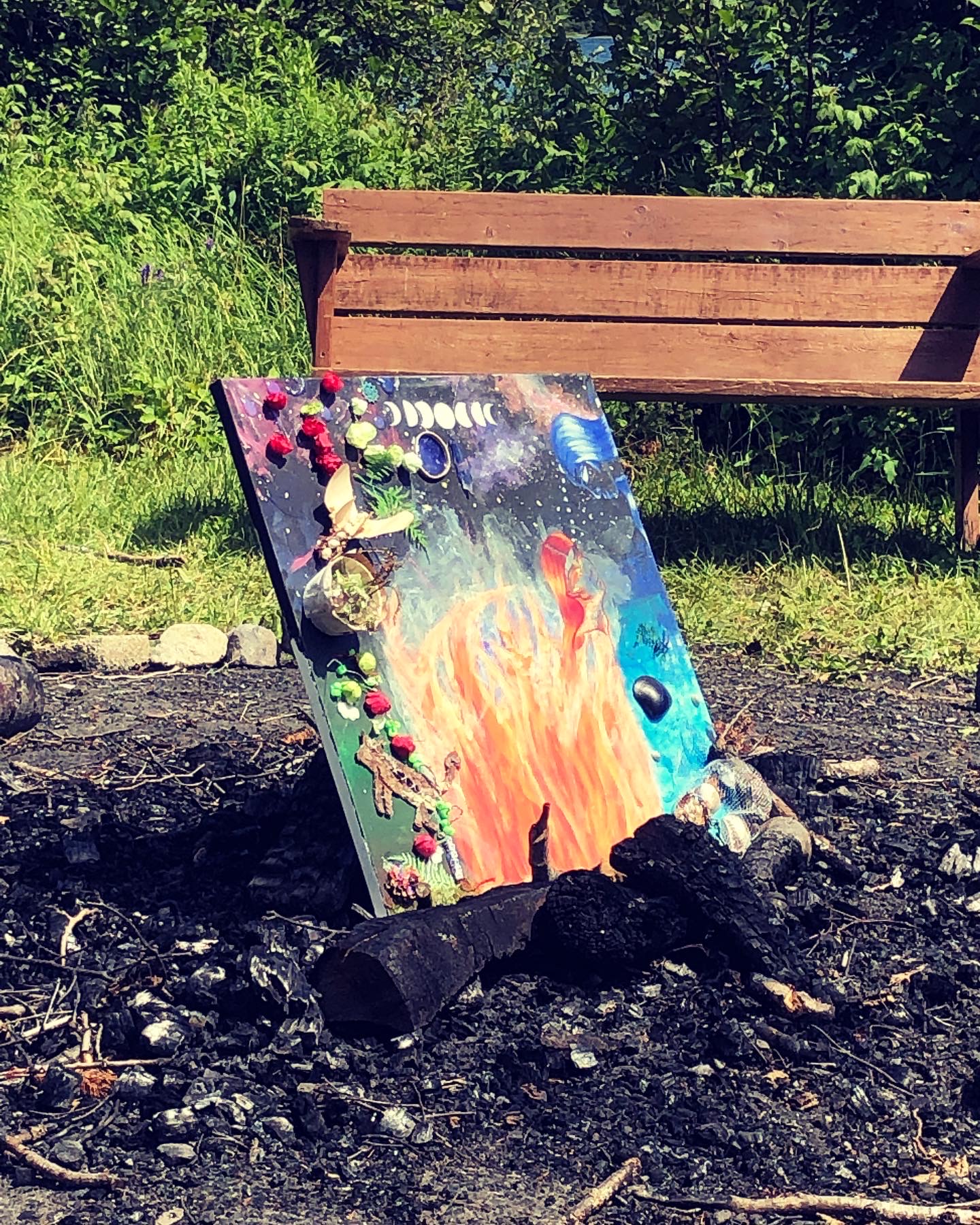
Over the summer 2022, both myself and Photographer Dayna Danger collaborated with POP Montreal and LOVE (Leave out Violence Everywhere) to facilitate an arts-based experiential for youth. Focused around the theme of climate justice and the intersections between land/body, the young people came together to create a narrative that explored their past, present and hopes for the future in terms of rebuilding relationships with the land.
Exhibition of their stores was held in September during Montreal’s POP festival. Sending out big auntie love for all the young people in our creative community!
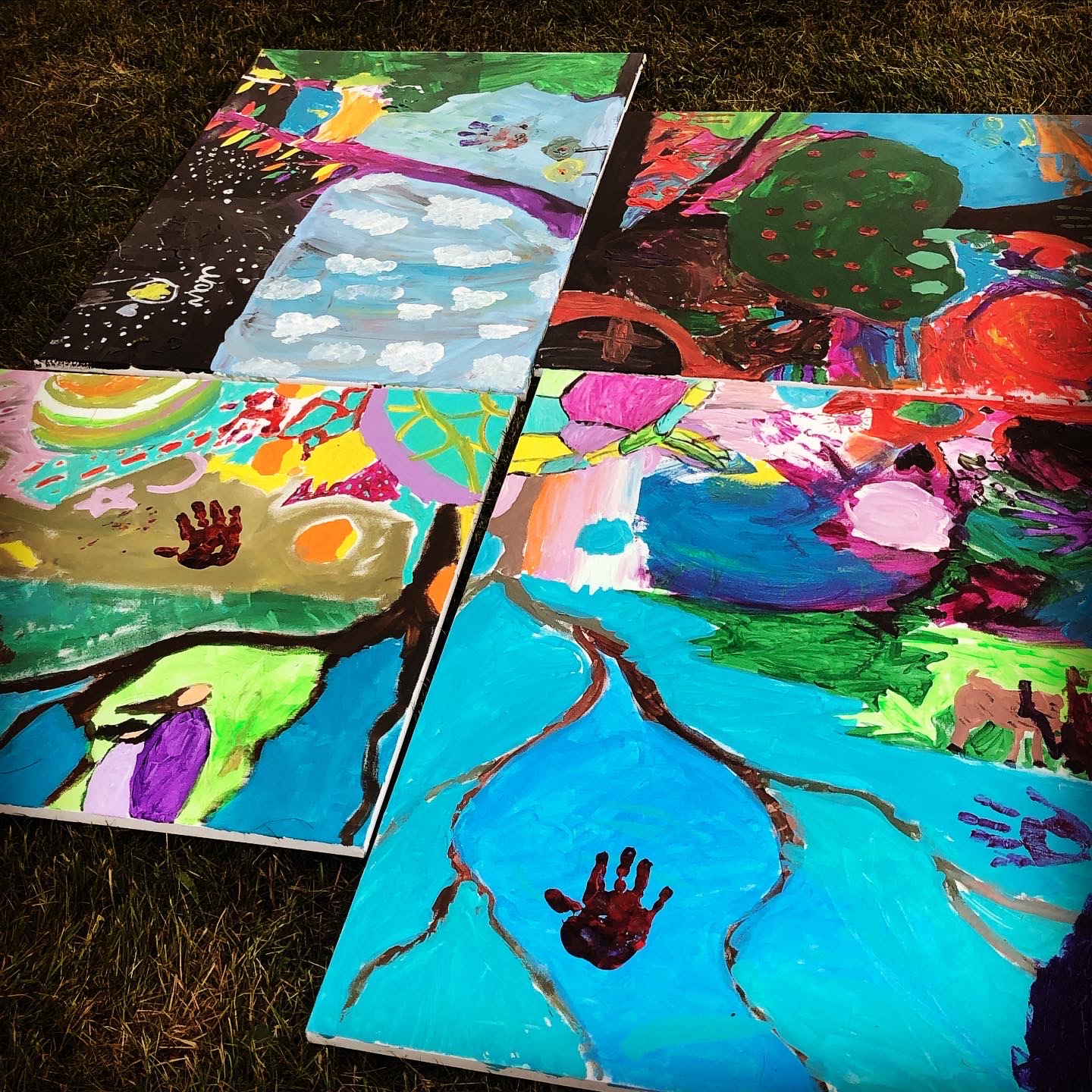
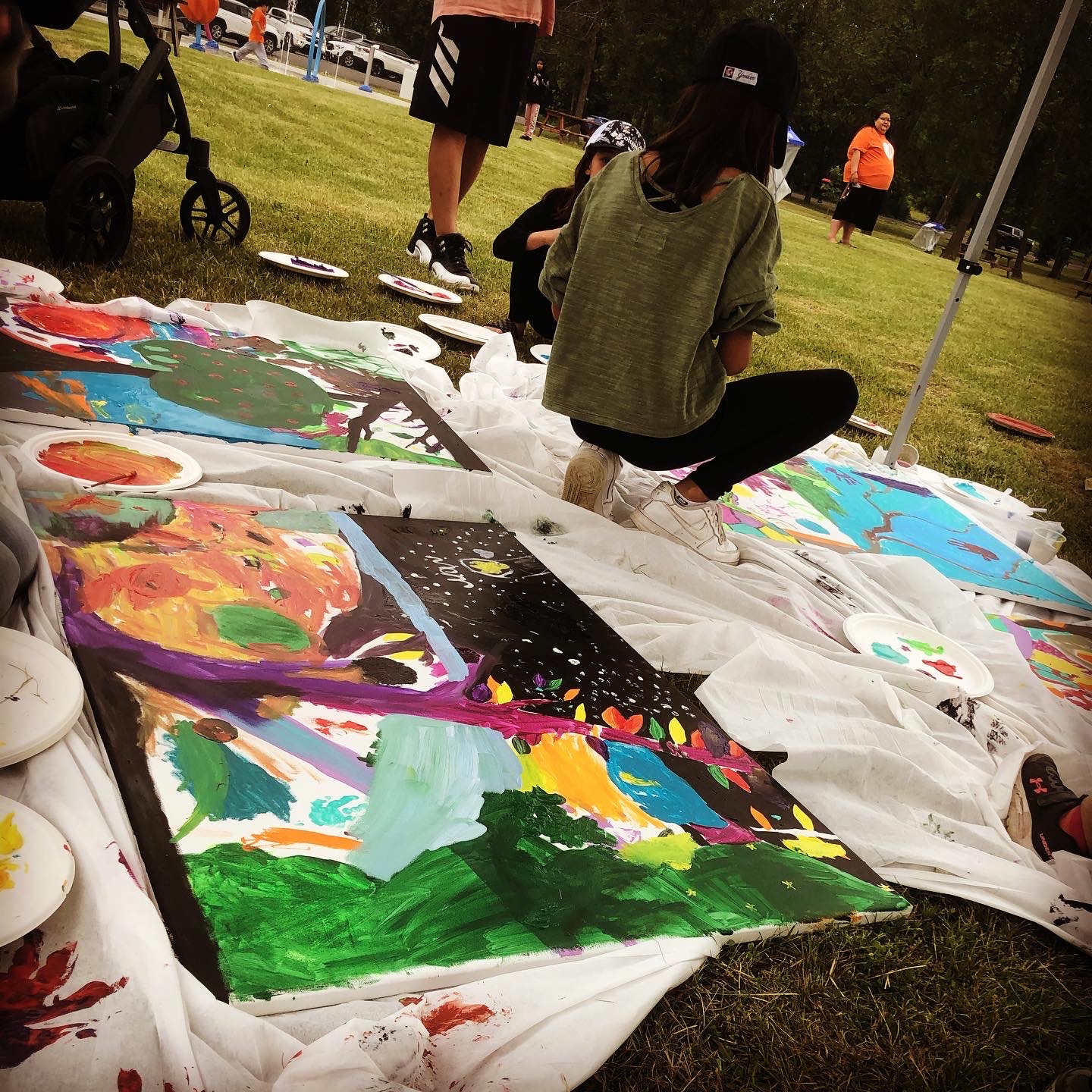
As part of the Indigenous People’s Day Block Party on July 21st 2022, organized by the Kanien’keháka Onkwawén:na Raotitióhkwa Language and Cultural Center, I facilitated a drop in mural for participants of all ages. The theme explored focused on celebrating who we are as Indigenous people. From children, teens to adults and families, dozens of community members contributed a small portion to this four part mural.
Once completed for the day, all four canvases were connected through black lines that I intended to use in weaving the narratives and energy of all the participants. This artwork was later displayed during the Iontkathóhtha’ Art Show in October 2022.
In collaboration with POP Montreal and L.O.V.E. (Leave Out Violence Everywhere), I facilitated a group of youth to design, paint and complete a bin mural for Montreal’s 2021 POP festival.
The story they wish to share was the importance of honouring mental health during the pandemic.
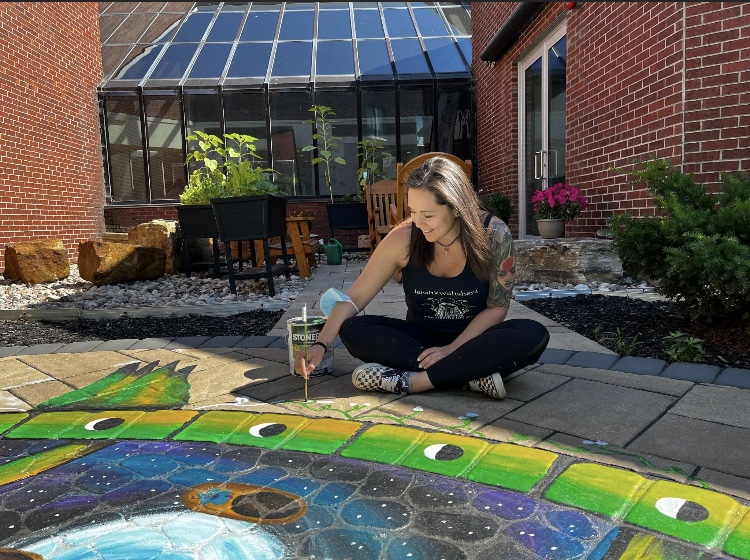
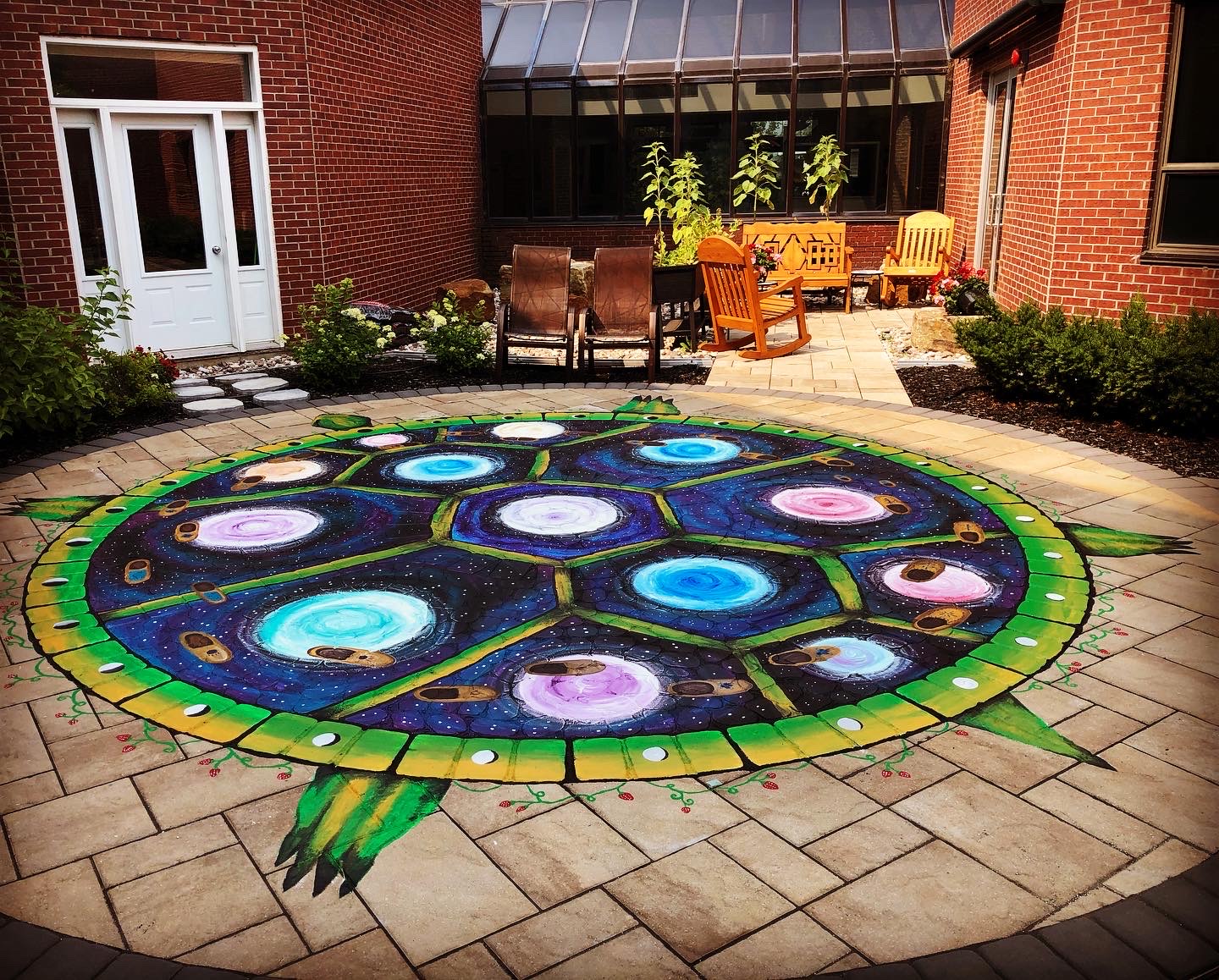
In July 2021, the Kateri Memorial Hospital Center invited me to paint a mural in their Healing Garden Space. Intended for ceremony, healing and growth in our traditional medicine program here in the community, this space would act as a gathering point for staff and clients alike.
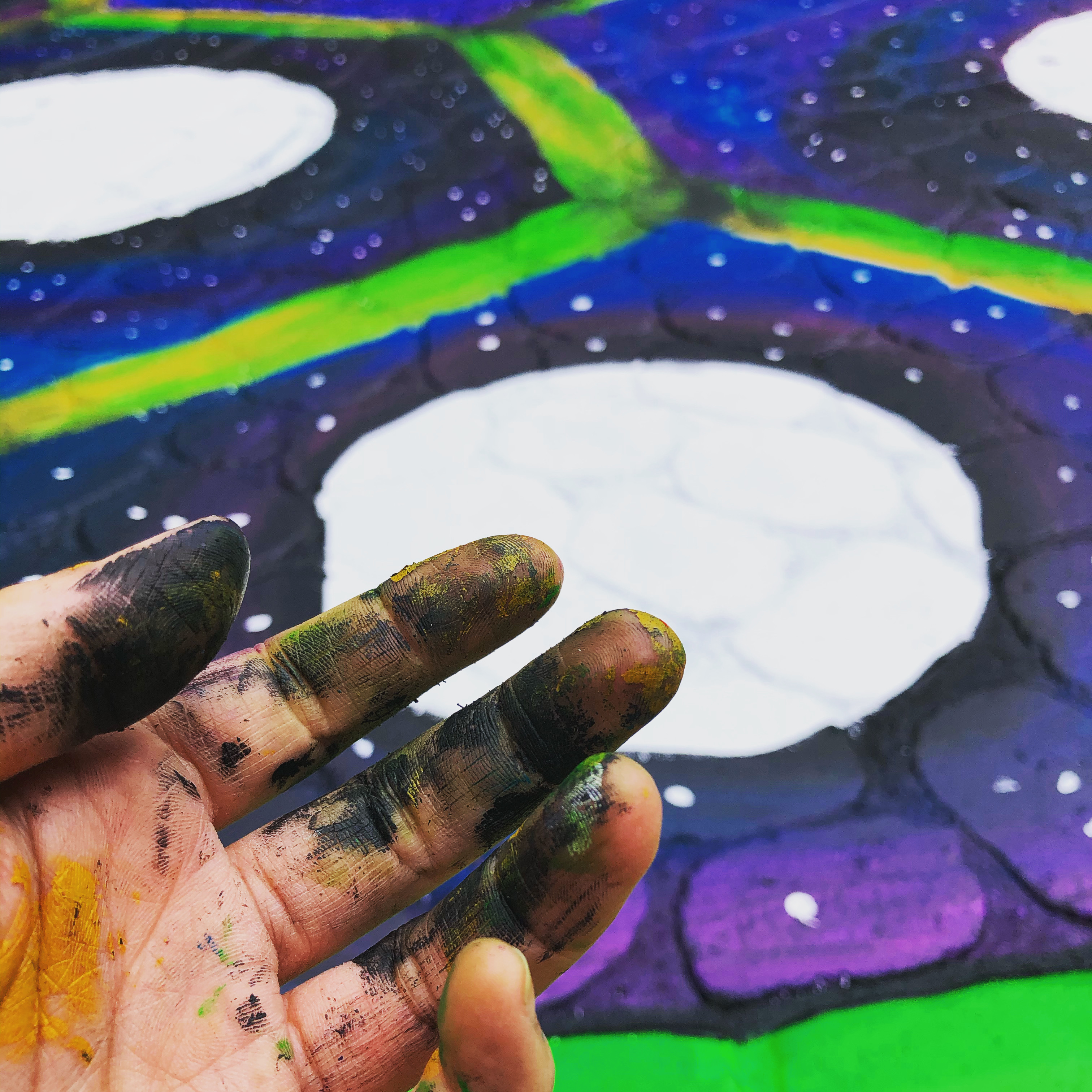
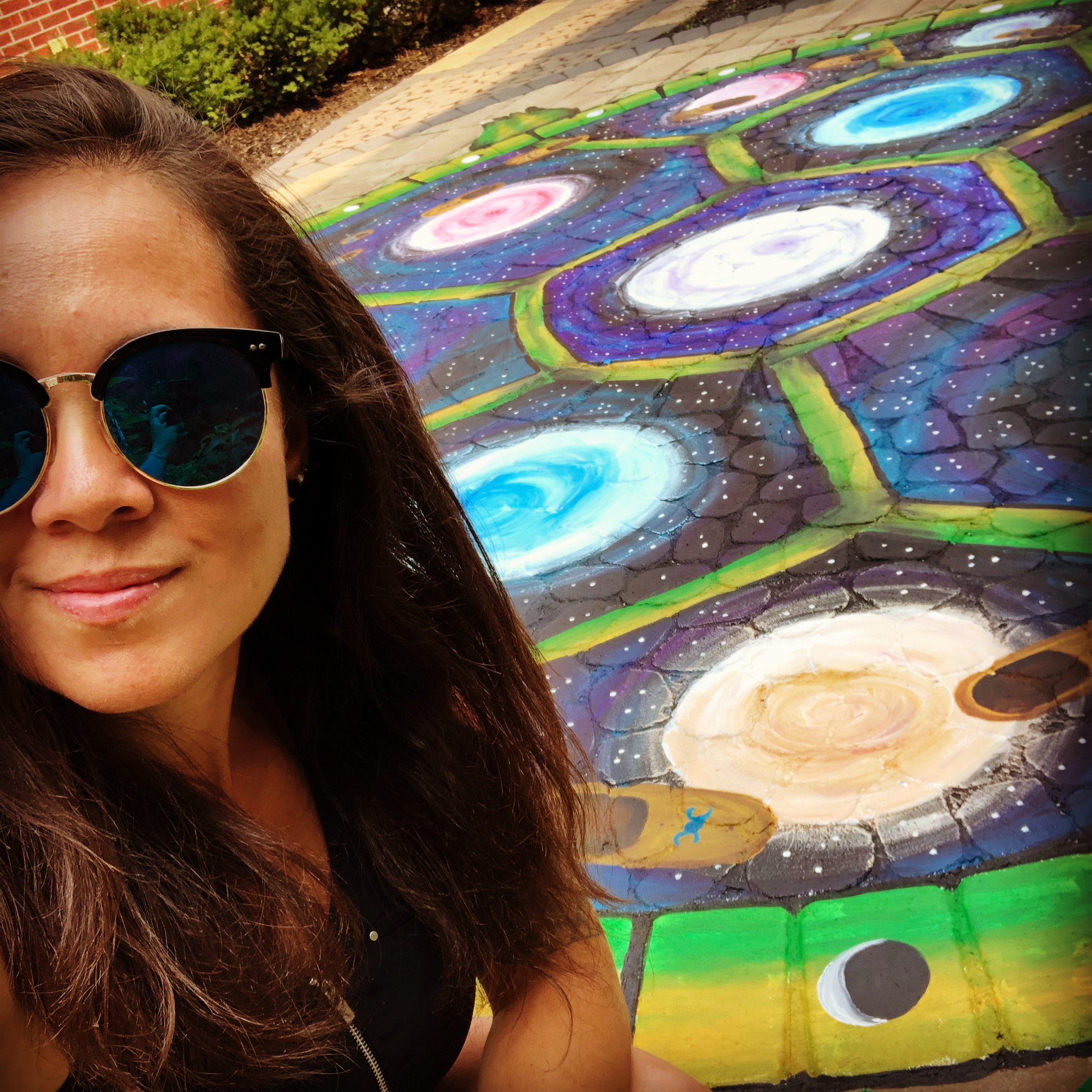
Following the natural shapes of the stone surfaces, I painted the turtle’s back as the foundation of all life and around its shell, them moccasins of the people. The people who are now our ancestors, the people of today and the people of the faces yet to come. Along its platelets, I honoured the thirteen moons and all their phases. These images invited in our Grandmother Moon teachings, reminding us that we are all part of the natural transition, growth and change in life.
The intention of this mural is the embody the beauty of change as we heal and grow as people.
On June 7th and 9th, the students and staff of Kateri School participated in a school wide mural to honor the children found in Kamloops, the children yet to be found and themselves. Both on-site students and remote learners were invited to either place a hand print on the canvas or submit a handprint to be sealed onto the painting. Kanienkeha’ka First Nations Art Therapist and 3rd Generation Residential School Survivor, Megan Kanerahtenhá:wi Whyte (MA, ATPQ, RCAT), invited each class from nursery to grade 6 to either sit or stand in circles in the outdoor classroom by the school garden space. Together, we talked about Residential Schools within Canada and within our own community in Kahnawake. In this conversation, each child was reminded that they mattered and they were loved. Each staff member, who once were children as well, were reminded that they mattered and they were loved. Whether child or adult, every participant was either a great grandchild, grandchild and child of a Residential School or Indian Day School survivor. Some staff were Indian Day School survivors. This was an important arts-based response to the historical trauma of Residential Schools across Turtle Island, from Kamloops to the traditional lands of the Kanienkeha’ka in Quebec. It created a sense of community across the generations, which is integral to creating cultural safe spaces for Indigenous people. The paintings will be permanently displayed at Kateri School in Kahnawake, which was historically a Day School.
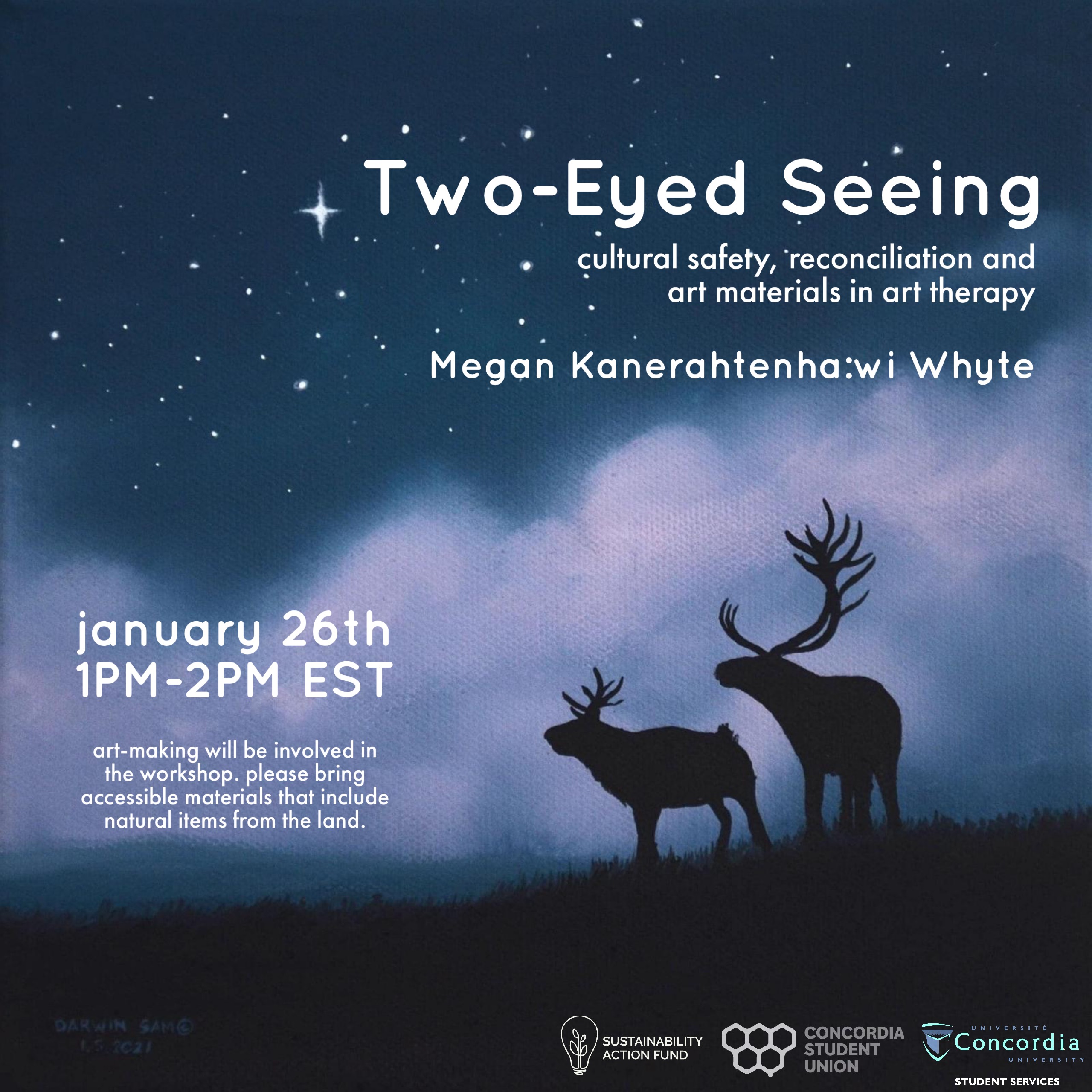
Although open only to the Creative Arts Therapies students at Concordia University today, this workshop aims to develop networks, approaches and perspective for working with and as BIPOC communities. It looks at the foundations of Two-Eyed Seeing, a perspective that embodies multiply ways of knowing. It aims to create spaces of reconciliation (or rather relationship building) between communities, using both Western and Indigenous knowledges. This acknowledges the role of oppression and the importance of empowerment, which can be applied to other BIPOC communities as well.
If interested in hosting this workshop for your organization, please feel free to contact me through the contact page.
Graduate art therapy research project entitled: Walking on Two-Row: Assessing Acculturative Identity through Material Interaction, An Indigenous Arts-Based Heuristic Inquiry
https://spectrum.library.concordia.ca/983681/













 Megan Kanerahtenha:wi Whyte