Category Archives: Artworks

Community Response Art to Residential Schools

On June 7th and 9th, the students and staff of Kateri School participated in a school wide mural to honor the children found in Kamloops, the children yet to be found and themselves. Both on-site students and remote learners were invited to either place a hand print on the canvas or submit a handprint to be sealed onto the painting. Kanienkeha’ka First Nations Art Therapist and 3rd Generation Residential School Survivor, Megan Kanerahtenhá:wi Whyte (MA, ATPQ, RCAT),  invited each class from nursery to grade 6 to either sit or stand in circles in the outdoor classroom by the school garden space. Together, we talked about Residential Schools within Canada and within our own community in Kahnawake. In this conversation, each child was reminded that they mattered and they were loved. Each staff member, who once were children as well, were reminded that they mattered and they were loved. Whether child or adult, every participant was either a great grandchild, grandchild and child of a Residential School or Indian Day School survivor. Some staff were Indian Day School survivors. This was an important arts-based response to the historical trauma of Residential Schools across Turtle Island, from Kamloops to the traditional lands of the Kanienkeha’ka in Quebec. It created a sense of community across the generations, which is integral to creating cultural safe spaces for Indigenous people. The paintings will be permanently displayed at Kateri School in Kahnawake, which was historically a Day School.  

Art has the power to heal. 

To dialogue. 

To build bridges. 

To connect. 

#everychildmatters

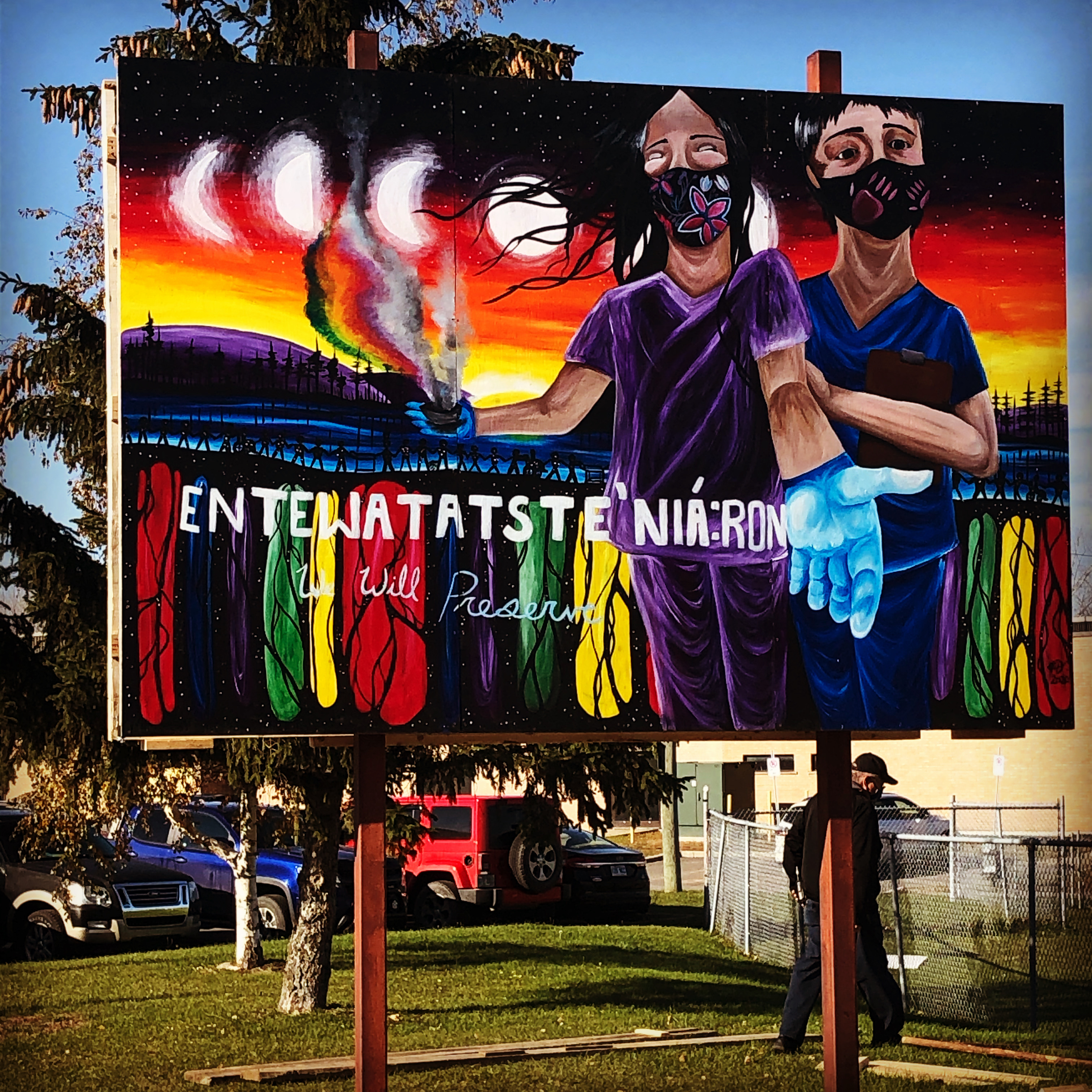
Billboard for the Kateri Memorial Hospital Center

The purpose of this mural is to honor the tireless work of the staff at the Kateri Memorial Hospital Center. From frontline workers to those who work in the background to ensure the hospital as a whole runs with both structure and humility, their ongoing effort to support its people truly reflects the concept of community. During the pandemic, the staff have been diligent to delivery safe services with the continued amount of care they have always brought to Kahnawake. 

In this image, I have painted two medical staff who are smiling and extending a warm welcome to our community. Both are wearing beaded masks made by our own people and one holds a burning sage bowl. From the smoke of the sage comes good energy, including the iconic rainbow colours we have come to associate with resilience during this pandemic seamlessly woven into the smoke. Behind them is a sunset with both the sun and the moon-cycle, to represent both the cultural teachings of transition and change as well as to demonstrate the around the clock dedication of our staff. Along the horizon line are all the staff standing together. This is to represent the community of people involved within the health system, who together hold us during this pandemic and always. From their feet run roots to the bottom of the mural because their devotion is rooted in the love from our ancestors, regardless of where we come from.

Written at the bottom is the word Entewatatse’nia:ron which translates to “we will preserve”. The entire concept embraces the work of the staff who ensure that we will overcome this pandemic as a community. 

I have so much gratitude for being invited to be part this project.

https://fb.watch/1AoP9G1x-b/

Video Archive: Art and Mindfulness for Children and Teens

This 20-minute video (produced by the First Nations Education Council) leads you through an exercise for children in grades 4/5/6 that teaches both perspective drawing as well as regulation during frustration. It touches upon cultural spring time themes as well as visualization.

Mindfulness for Children and parents

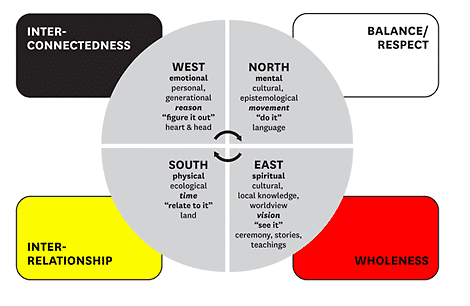
Within scheduling, it can be important to make time for holistic self-care. During the morning, I dedicate time to exploring daily self-care by using medicine wheel teachings. Each sector influences the other.

For instance, if we have negative thoughts, it may affect our emotions. We may feel anxiety, shame, doubt etc. These may the influence our bodies, feeling nausea, exhaustion and headaches. All of these impact our spiritual health, disconnecting us from each other, ourselves and the land.

Graphic made by the Anishinaabe Bimaadiziwin Cultural Healing and Learning Program

Physical: We take daily walks outside and follow online yoga videos (my youngest loves cosmicyoga on youtube). Dress for the weather (we are in a transitionary spring climate that shifts from -13 degrees to +16). Dress for the weather. There are so many teachings the land can offer (snow, rain, sun, wind). We take care of our bodies with nutrition and gardening. Yoga practices breathing and creating mindfulness is a good step to learning self-regulation.

for parents: take time for yourself to also walk with them or to follow your own exercise program. Model physical activity, which may inspire your children to do the same.

Mental: We make time to talk about our thoughts in the world, which naturally unfold when we make art and play together. The children have the opportunity to share their fears or musing about the future. We have made art and took time to process them. Additionally, by doing STEAM activities, they are exercising their executive functions like problem-solving, adapting and reflecting.

for parents: take time to talk to your support network and process your thoughts. Facetime, phone calls, text or online forums to practice safe social distancing while maintaining connection with others. Do activities for yourself too, whether that be work, reading or keeping a daily log. Journals do not have to be just for teens, we can use them too! Jstor has also made their database accessible to the public so nows the time to explore that one thing you have always been interested in:

Open-Access JSTOR Materials Accessible to the Public

Emotional: We have a dedicated time to explore emotional expression. Using art and a daily art journal (which we have always had), we make time to explore feelings. Modeling that it is safe to look at all our feelings, even if we are uncomfortable, is helpful for children to learn how to express. Be there for them and remember to be the secure base for them. If you feel activated, name it for yourself and allow yourself to be there. Feelings are safe.

For parents: Again, stay in contact with your social networks. It is ok to show vulnerability to children because it shows them that they can be vulnerable too. But be mindful of how we choose to regulate. Make art, breathing exercises, exercise.

Here are some free mindfulness apps: insight timer; smiling mind; stop, breathe & think; UCLA mindful; 10% happier

Spiritual: Each morning, we begin with a smudge and the Ohenton Kariwatehkwen (thanksgiving address). We practice spiritual connection when we connect with each other and the land.

For parents: spirituality does not have to mean religion. It can mean connection.

Although these are separated into categories, they often interconnect–especially when making art or spending time in nature.


APTN Skindigenous Mini-Documentary Series

As part of APTN’s season 2 series called Skindigenous, I was invited to participate in a mini documentary about art therapy in First Nations communities.

In our conversation, we explored the role of multigenerational trauma and the impact of cultural restoration in community health. There was focus on identity exploration and the power art-making lends to its creator to deconstruct and reconstruction what it means to be Indigenous.

The Art of Art Therapists

69170962_2391910347743857_4289856611335274496_n

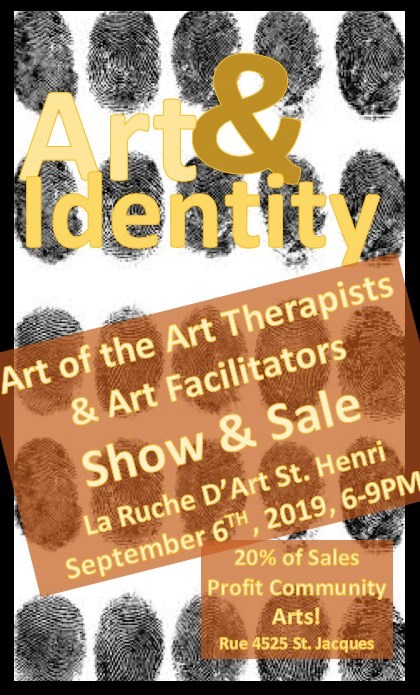
Between now and the end of September, an exhibition is being held at the La Ruche D’Art Art Hive. The Art Hive is a community art studio where individuals and groups are invited to freely create with the materials available, free of cost. This studio increases accessibility to community building, creativity and mental health support through the visual arts.

The current exhibition features both art therapists and art facilitators as they explore their own identity as professionals in the field. The artworks I have included in this exhibition are for sale. If interested, please contact me via my contact page to set up an e-transfer or visit the exhibition.

This slideshow requires JavaScript.


Mural for Champlain College’s Indigenous Awareness Week

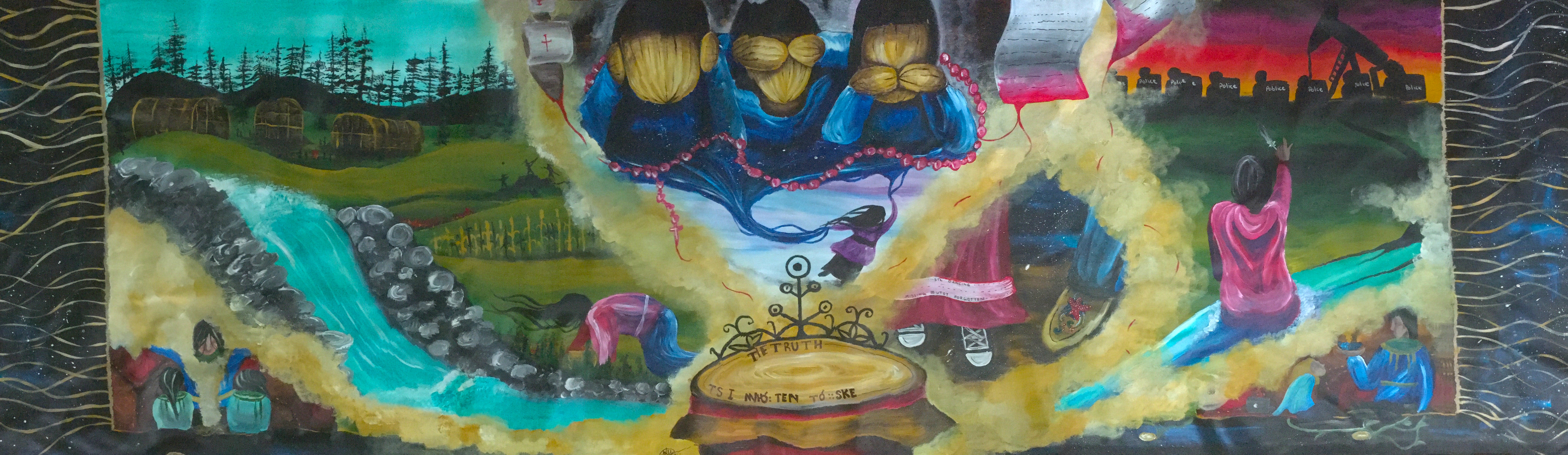
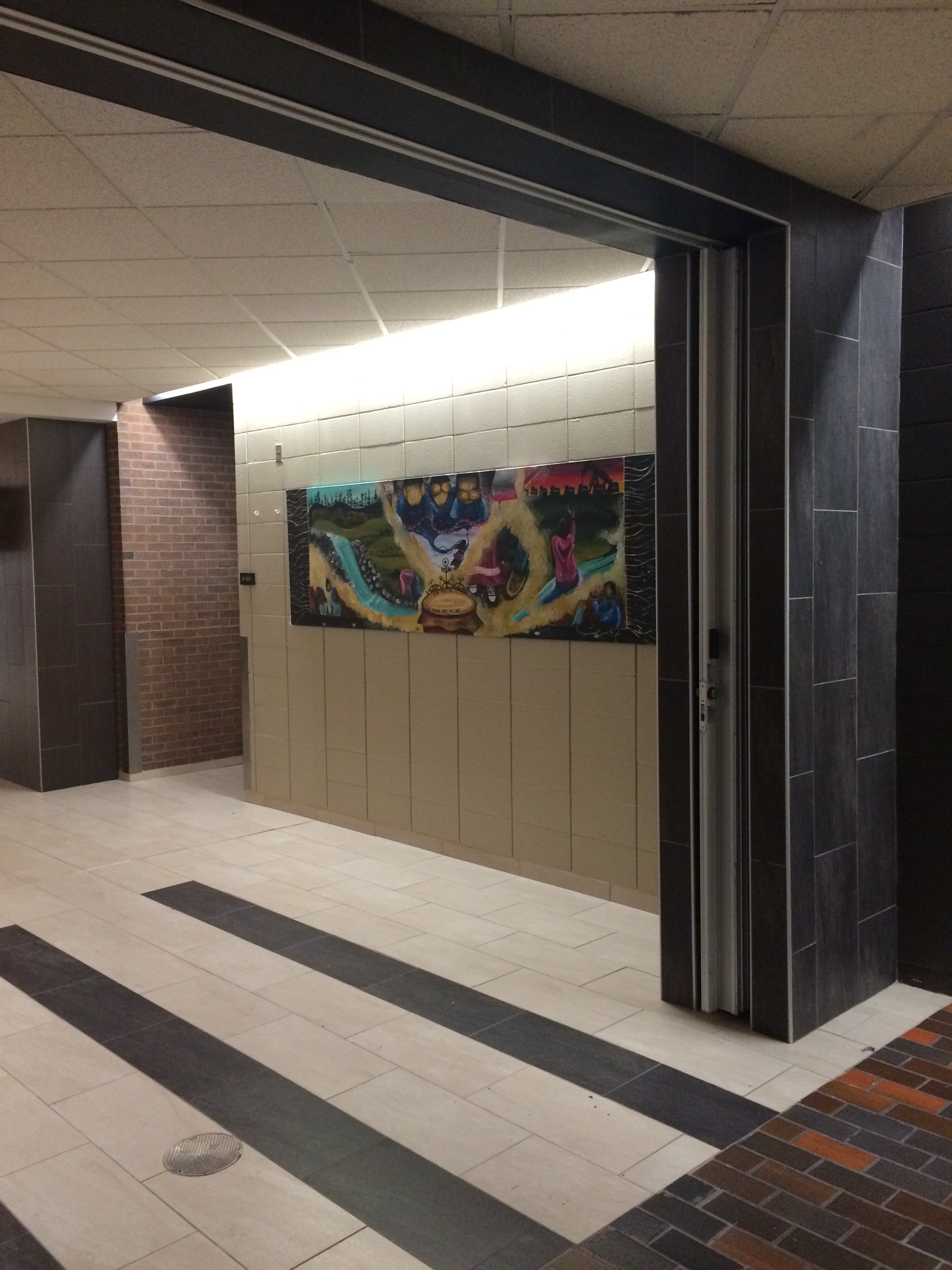
In March 2019, the following artwork was commissioned as part of Champlain College’s (QC) Indigenous Awareness Week. The goal was to create an image that reflected on traditional knowledge, colonization and trauma as well as the multigenerational resilience of Indigenous people.

IMG_0556

“Multigenerational Resilience” (2019). Megan Kanerahtenha:wi Whyte. Acrylic on un-stretched canvas

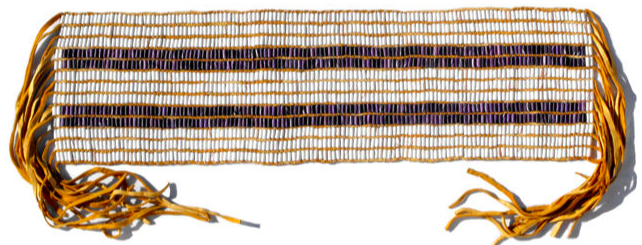
Taking a Mohawk First Nation’s approach, the painting was constructed through narrative, contained in the symbol of a wampum and spread across a 3ft by 8ft canvas. The two-row wampum, to provide some background to this symbol, was a historic treaty agreement between the First Nations people and the Crown that stated that each nation was of its own way of life, living side by side.

The imagery within this symbol was meant to timeline the role of colonization and its impact on Indigenous wellness, including how genocide, missing and murdered Indigenous women, legislative violence and Residential schooling led to multigenerational trauma as well as outstanding socio-economic marginalization. The  wampum symbol within the current societal context thus reflects the social commentary on the poor state of ‘nation-to-nation’ dialogue with Indigenous communities. The mural also acts to reflect the multigenerational wisdom and resilience of Indigenous people through the ways communities have adapted to cultural safety and that ways nations stand in solidarity against injustice to land, body and culture.

This mural now permanently resides at the Champlain College in Quebec as a conversation piece among its students. Reconciliation begins with dialogue.

IMG-9069

Mural displayed at Champlain College.

CBC Montreal “Turtle Island Reads”

On September 21st 2016, I was commissioned by CBC radio to create a live painting for their Turtle Island Reads. Turtle Island Reads is an Indigenous initiative that celebrates First Nations, Metis and Inuit literature that have had a significant impact on educators, youth and professionals in the community.

The live event consisted of a panel of community members discussing the role of Indigenous literature in the context of decolonization, socio-political movements and identity development.

My role was to capture the theme of the hour-long event within the hour provided. I chose to paint the creation story as a segue into exploring how narratives shape our lives as Indigenous people.

TEESPRING CAMPAIGN FOR INDIGENOUS YOUNG PARENTING PROGRAM

Support the continuation of Skatne Ionkwatehiarontie (Our Families Grow Together), a youth-led and grassroots Haudenosaunee parenting program for young parents under the age of 25. Participants include young parents, pregnant women and couples, youth thinking of starting families as well as sibling caregivers, aunts, uncles, step parents, two spirited and LGBTTIQQA community members.

The mission of the group is to explore and decolonize child development, sexual health, and attachment parenting through an interactive and arts-based look into our Haudensosaunee seven rights of passage ceremonies, creation story and other traditional knowledge.

As a second layer, the program aims to reduce the stigma young parents face by empowering them through story sharing, elders, cultural teachings and art-processing.

The program is closing it’s second 10 week session. Check out our facebook page for more information: www.facebook.com/OurFamiliesGrowTogether

Sales for this t-shirt will go towards creating a sustainable program.

Fuelling the next generation!

Art-making and Self Determine-Nation

Yesterday, a colleague and I travelled to Quebec City to co-facilitate a workshop on human rights, community mobilization and youth activism as part of the Quebec and Labrador First Nations Youth Forum.

Screen Shot 2015-08-10 at 2.52.03 PM

Participants visual art response to the question: What human rights are you passionate about and what is one thing you can do for yourself, your family or your community to acknowledge it?

As the media arts coordinator of the Kahnawake Youth Forum and in collaboration with the Native Youth Sexual Health Network, we put together a series of art activities and ice breaker warm ups to move the energy and activate the processing abilities of the group.

From human rights pick up lines to creating a Self Determine-Nation collage, we journeyed through the grey area, also known as Human Rights.

Screen Shot 2015-08-10 at 2.52.11 PM

Circle debrief

We reminded ourselves, that Indigenous rights are human rights. They are not “special rights”.

We reminded ourselves that we are born into our language, our culture and the land. These are inherent rights and are legally binding (UNDRIP–United Nations Declaration on the Rights of Indigenous People); they are not given or determined by an outside entity.

We also reminded ourselves of the work of our ancestors, like Deskaheh, who teach us how to stand up for our rights as Indigenous People and as Human Beings. He teaches us that we have a voice in the United Nations arena and that we have a voice on what affects our own lives.

Screen Shot 2015-08-10 at 2.52.17 PM

Colleague Jessica Deer and I

Through the work that we do, we always reminded that changes and conversations on Human Rights do not have to start at the UN level, but can and should start in the home, in the family and in the community.

Art creates change.