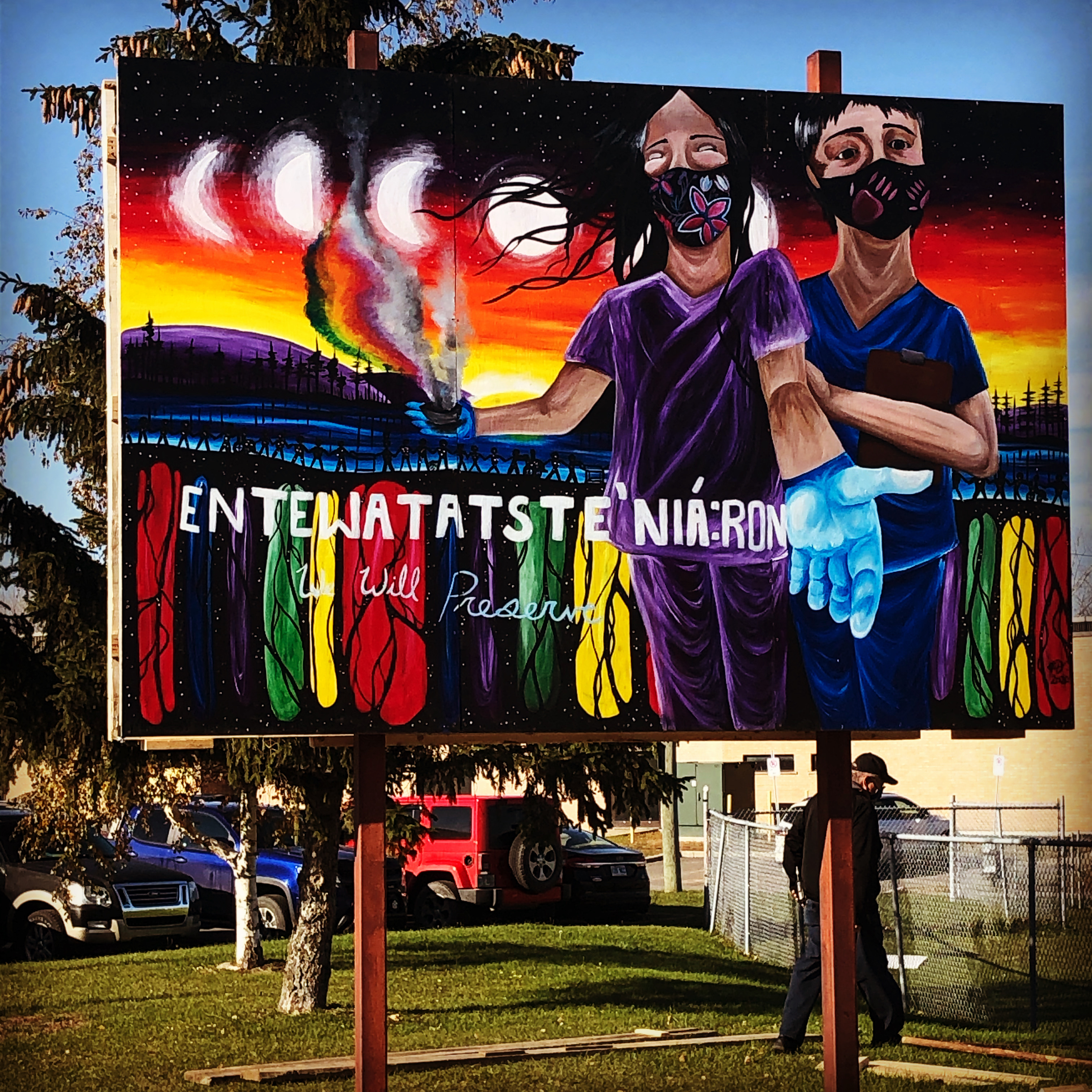
Billboard for the Kateri Memorial Hospital Center

The purpose of this mural is to honor the tireless work of the staff at the Kateri Memorial Hospital Center. From frontline workers to those who work in the background to ensure the hospital as a whole runs with both structure and humility, their ongoing effort to support its people truly reflects the concept of community. During the pandemic, the staff have been diligent to delivery safe services with the continued amount of care they have always brought to Kahnawake. 

In this image, I have painted two medical staff who are smiling and extending a warm welcome to our community. Both are wearing beaded masks made by our own people and one holds a burning sage bowl. From the smoke of the sage comes good energy, including the iconic rainbow colours we have come to associate with resilience during this pandemic seamlessly woven into the smoke. Behind them is a sunset with both the sun and the moon-cycle, to represent both the cultural teachings of transition and change as well as to demonstrate the around the clock dedication of our staff. Along the horizon line are all the staff standing together. This is to represent the community of people involved within the health system, who together hold us during this pandemic and always. From their feet run roots to the bottom of the mural because their devotion is rooted in the love from our ancestors, regardless of where we come from.

Written at the bottom is the word Entewatatse’nia:ron which translates to “we will preserve”. The entire concept embraces the work of the staff who ensure that we will overcome this pandemic as a community. 

I have so much gratitude for being invited to be part this project.
https://fb.watch/1AoP9G1x-b/

Video Archive: Art and Mindfulness for Children and Teens

This 20-minute video (produced by the First Nations Education Council) leads you through an exercise for children in grades 4/5/6 that teaches both perspective drawing as well as regulation during frustration. It touches upon cultural spring time themes as well as visualization.

Mindfulness for Children and parents

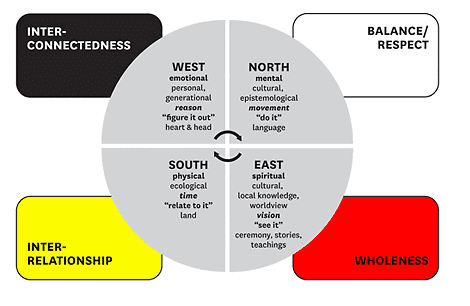
Within scheduling, it can be important to make time for holistic self-care. During the morning, I dedicate time to exploring daily self-care by using medicine wheel teachings. Each sector influences the other.

For instance, if we have negative thoughts, it may affect our emotions. We may feel anxiety, shame, doubt etc. These may the influence our bodies, feeling nausea, exhaustion and headaches. All of these impact our spiritual health, disconnecting us from each other, ourselves and the land.

Graphic made by the Anishinaabe Bimaadiziwin Cultural Healing and Learning Program

Physical: We take daily walks outside and follow online yoga videos (my youngest loves cosmicyoga on youtube). Dress for the weather (we are in a transitionary spring climate that shifts from -13 degrees to +16). Dress for the weather. There are so many teachings the land can offer (snow, rain, sun, wind). We take care of our bodies with nutrition and gardening. Yoga practices breathing and creating mindfulness is a good step to learning self-regulation.

for parents: take time for yourself to also walk with them or to follow your own exercise program. Model physical activity, which may inspire your children to do the same.

Mental: We make time to talk about our thoughts in the world, which naturally unfold when we make art and play together. The children have the opportunity to share their fears or musing about the future. We have made art and took time to process them. Additionally, by doing STEAM activities, they are exercising their executive functions like problem-solving, adapting and reflecting.

for parents: take time to talk to your support network and process your thoughts. Facetime, phone calls, text or online forums to practice safe social distancing while maintaining connection with others. Do activities for yourself too, whether that be work, reading or keeping a daily log. Journals do not have to be just for teens, we can use them too! Jstor has also made their database accessible to the public so nows the time to explore that one thing you have always been interested in:

Open-Access JSTOR Materials Accessible to the Public

Emotional: We have a dedicated time to explore emotional expression. Using art and a daily art journal (which we have always had), we make time to explore feelings. Modeling that it is safe to look at all our feelings, even if we are uncomfortable, is helpful for children to learn how to express. Be there for them and remember to be the secure base for them. If you feel activated, name it for yourself and allow yourself to be there. Feelings are safe.

For parents: Again, stay in contact with your social networks. It is ok to show vulnerability to children because it shows them that they can be vulnerable too. But be mindful of how we choose to regulate. Make art, breathing exercises, exercise.

Here are some free mindfulness apps: insight timer; smiling mind; stop, breathe & think; UCLA mindful; 10% happier

Spiritual: Each morning, we begin with a smudge and the Ohenton Kariwatehkwen (thanksgiving address). We practice spiritual connection when we connect with each other and the land.

For parents: spirituality does not have to mean religion. It can mean connection.

Although these are separated into categories, they often interconnect–especially when making art or spending time in nature.


Foraging our Paths Community Art Work

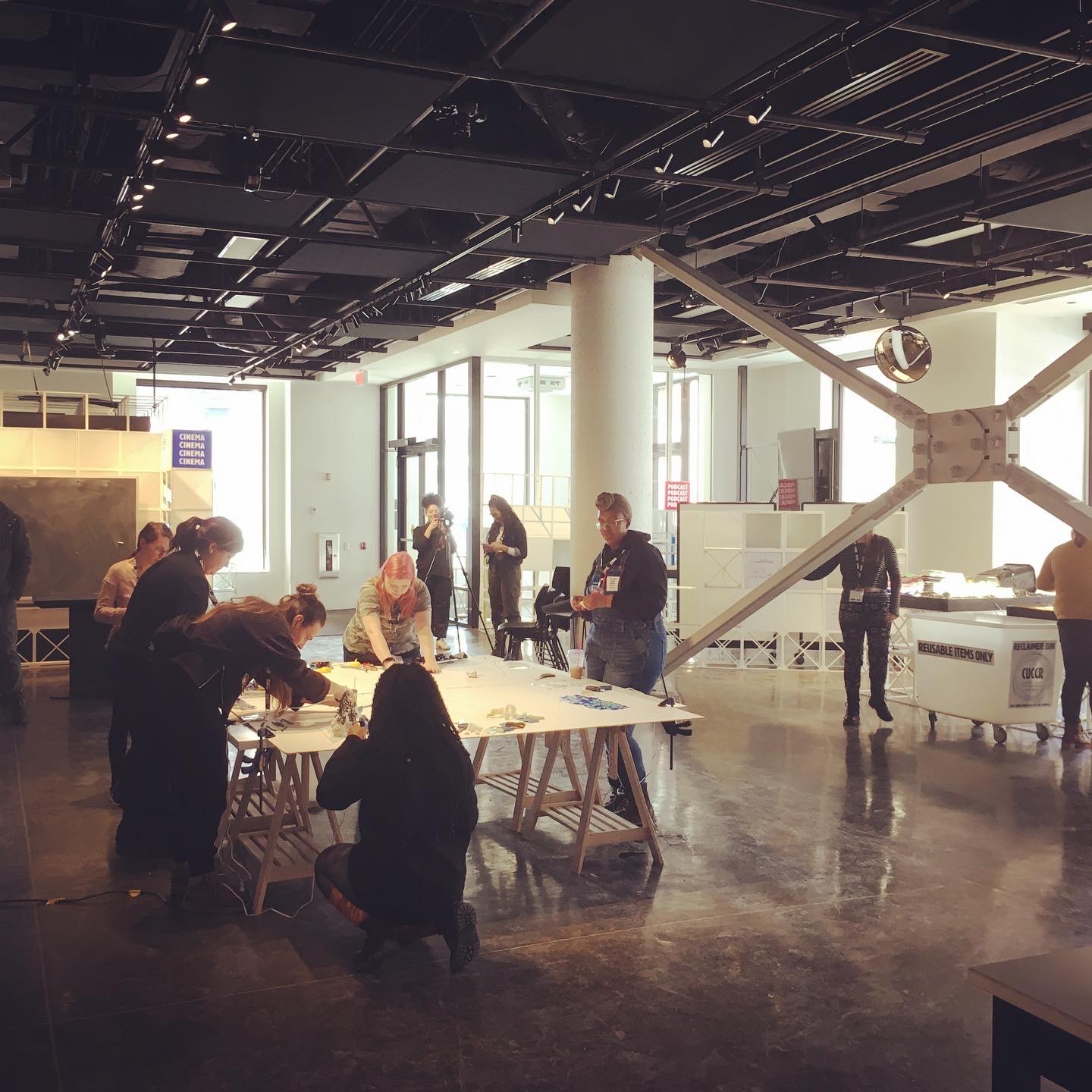
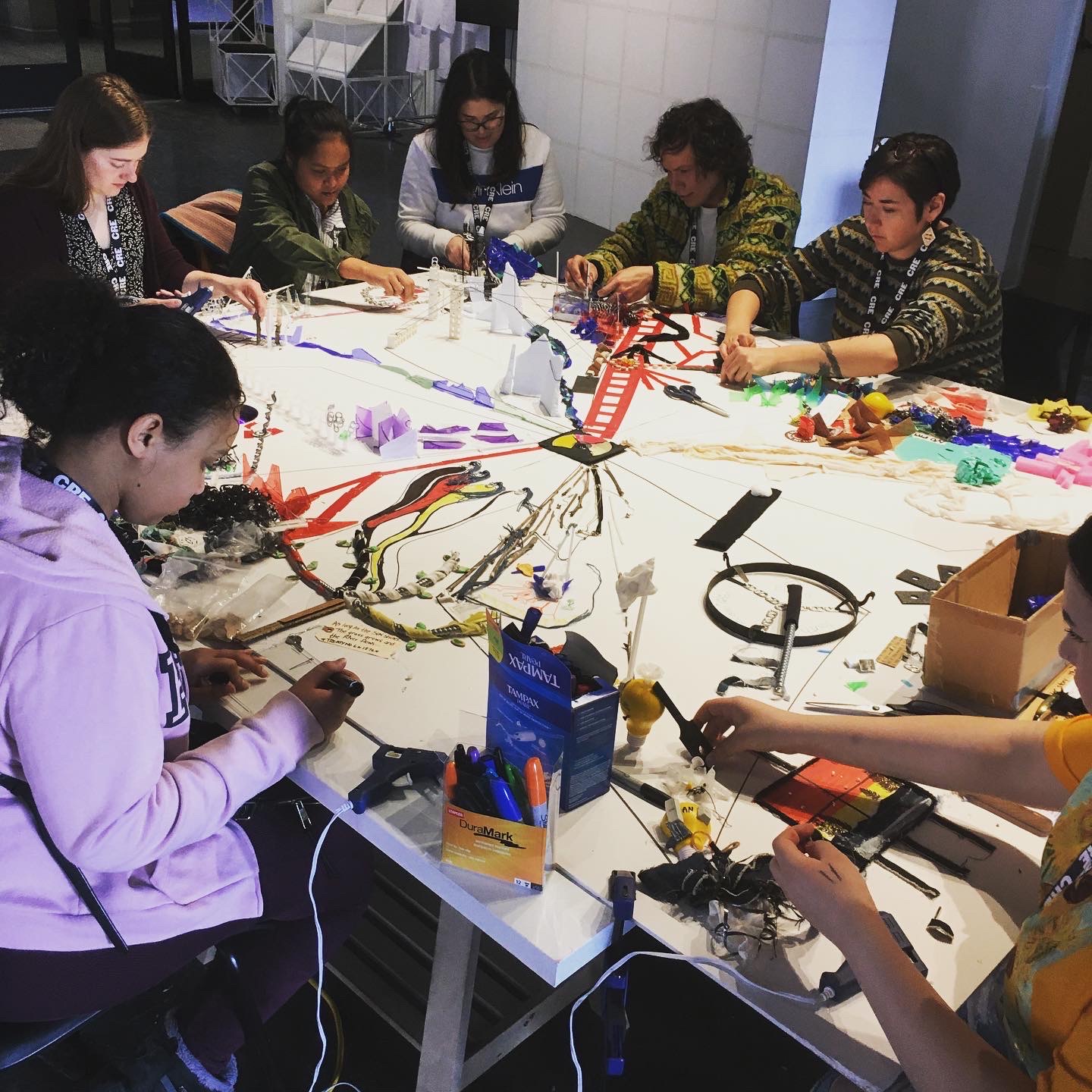
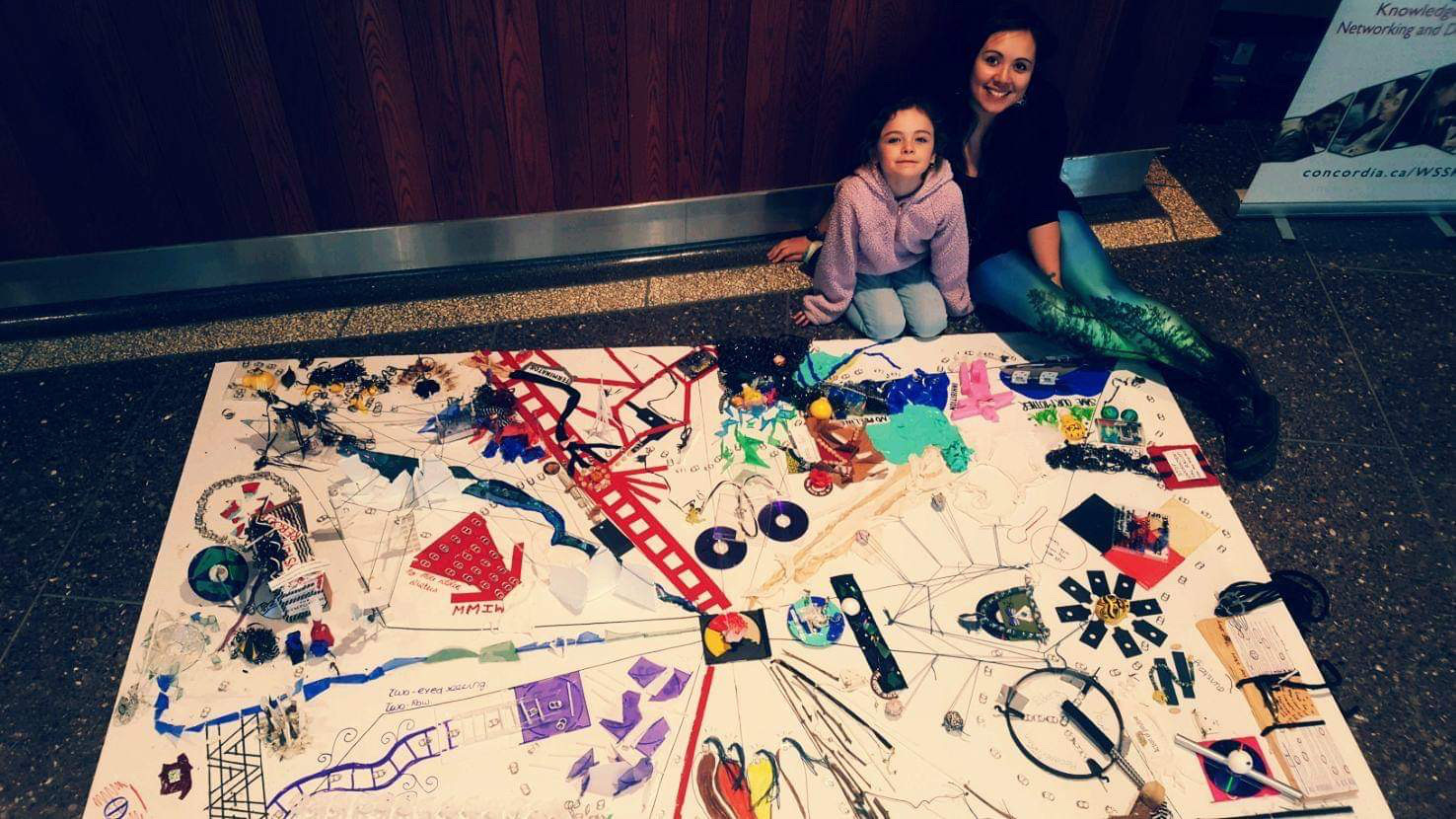
From February 22nd to 24th, Canadian Roots Exchange and its partners invited me to facilitate a 3-day emergent sculpture as part of the Foraging Our Paths youth conference. Participants were Indigenous and non-indigenous who attended came from coast to coast. They were invited to bring objects from their homeland together create a group sculpture as part of the dialogue around environmental violence and land relations.

Gathering at 4th space to explore found objects

Hosted by Concordia University’s 4th space, local resources were donated for the project including garbage, recycling and other found objects. Participants were invited to explore the objects and use them to tell a story about their relations to the land. Some came in with ideas and others used the materials to speak for them. All objects were secured using different glue-based fixtures. 

Youth from across Canada, Indigenous and non-Indigenous, making art and community to discuss the same issues.

Over our time together, conversations emerged around natural resources, climate change, capitalism and the role of each of us in building bridges to a healthier world. Many brought their experiences with infrastructures and some brought their innocence. Together we were able to bridge community through land.

These conversations came a critical time, when communities across the nation were coming together to stand in solidarity with the Wet’suwet’en people in their stance against the Canadian pipeline proposed to run through their community. In a long line of history of land removal in this way, barricades and teachings went viral around indigenous history and the importance of speaking for the land.

#cre #survivance2020

APTN Skindigenous Mini-Documentary Series

As part of APTN’s season 2 series called Skindigenous, I was invited to participate in a mini documentary about art therapy in First Nations communities.

In our conversation, we explored the role of multigenerational trauma and the impact of cultural restoration in community health. There was focus on identity exploration and the power art-making lends to its creator to deconstruct and reconstruction what it means to be Indigenous.

Youth Reconciliation Mural

Between November 30th and December 1st, I facilitated a 12 hour mural weekend workshop to help a group of youth envision and create an image to reflect their conversation about decolonization.

Beginning with an open studio art-hive approach, the group was invited to visually and symbolically explore their experience of privilege, decolonization and reconciliation. As a collective, we co-created a unified image that reflected each voice within the process. Through this project, it was evident how the creative process can support individuals to process challenging social, political and person content as well as build a sense of community.

Thank you CRE Youth Reconciliation Initiative, Press Start, Concordia’s office of community engagement and the Montreal Indigenous Community NETWORK for inviting me to build a creative community with these young change-makers. This mural can be seen at Batiment 7.

Decolonizing Consent

On September 24th 2019, I was invited to facilitate an arts-based workshop on decolonizing consent; reclaiming land and body for McGill University’s consent compaign. With support from the First People’s house and McGill’s response, education and support for sexual assault initive, this evening was made possible. Through an immersive experience,  participants were invited to create art and dialogue about environmental justice, multigenerational trauma and indigenous ways of knowing.

We, as a community, may not have change the system, extraction industries and commercialism, but we have changed the ways we have come to understand our connections between the land and body.

The Art of Art Therapists

69170962_2391910347743857_4289856611335274496_n

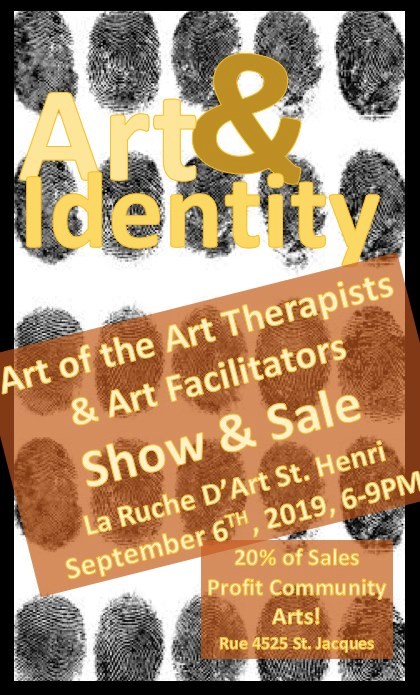
Between now and the end of September, an exhibition is being held at the La Ruche D’Art Art Hive. The Art Hive is a community art studio where individuals and groups are invited to freely create with the materials available, free of cost. This studio increases accessibility to community building, creativity and mental health support through the visual arts.

The current exhibition features both art therapists and art facilitators as they explore their own identity as professionals in the field. The artworks I have included in this exhibition are for sale. If interested, please contact me via my contact page to set up an e-transfer or visit the exhibition.

This slideshow requires JavaScript.


Cellblock Mural

In July, the elders and I organized a mural project for ten Indigenous male inmates as part of their group work towards holistic and culturally safe healing at a federal prison. Together, from drawing the concept to its final realization, we spent two weeks co-creating a wall mural that extended throughout their cell block.

It was a moment of positive social exchange and teamwork as well as a moment of self-reflection and building cultural identity. It was access to cultural safety, identity and self-expression; it was trauma work.

There was both laughter and seriousness as we spent time in candid conversation, casually painting. There were moments of focus, contemplation and the delight of mixing colours. There was pride and courage to try something new as well as unconditional support when self doubt spoke too loud. There was joy and there was gratitude. Overtime, the wall began to transform into a change of seasons that blended each of their traditional territories, mirroring their own growth as people.

On the surface, what we created during those two weeks was a large colouring painting but what we really did was make social change


Mural for Champlain College’s Indigenous Awareness Week

In March 2019, the following artwork was commissioned as part of Champlain College’s (QC) Indigenous Awareness Week. The goal was to create an image that reflected on traditional knowledge, colonization and trauma as well as the multigenerational resilience of Indigenous people.

IMG_0556

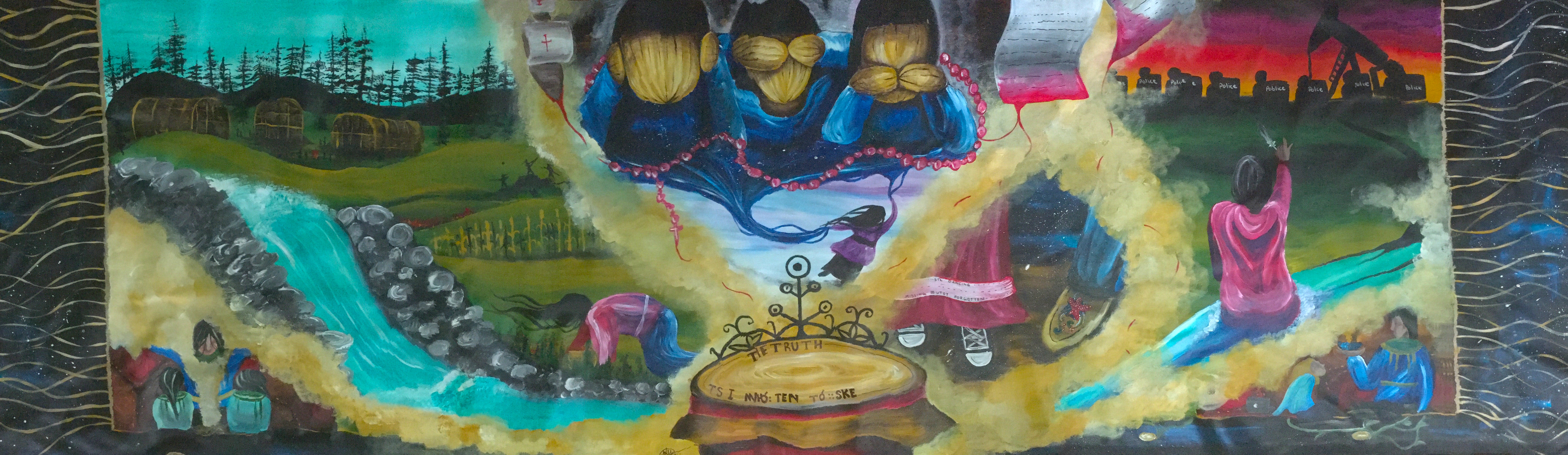
“Multigenerational Resilience” (2019). Megan Kanerahtenha:wi Whyte. Acrylic on un-stretched canvas

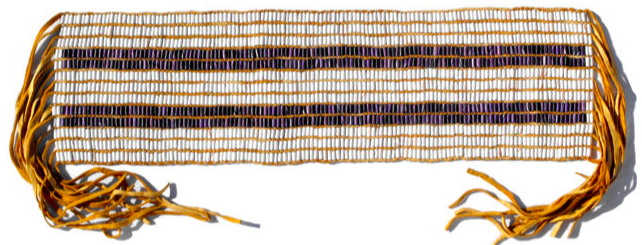
Taking a Mohawk First Nation’s approach, the painting was constructed through narrative, contained in the symbol of a wampum and spread across a 3ft by 8ft canvas. The two-row wampum, to provide some background to this symbol, was a historic treaty agreement between the First Nations people and the Crown that stated that each nation was of its own way of life, living side by side.

The imagery within this symbol was meant to timeline the role of colonization and its impact on Indigenous wellness, including how genocide, missing and murdered Indigenous women, legislative violence and Residential schooling led to multigenerational trauma as well as outstanding socio-economic marginalization. The  wampum symbol within the current societal context thus reflects the social commentary on the poor state of ‘nation-to-nation’ dialogue with Indigenous communities. The mural also acts to reflect the multigenerational wisdom and resilience of Indigenous people through the ways communities have adapted to cultural safety and that ways nations stand in solidarity against injustice to land, body and culture.

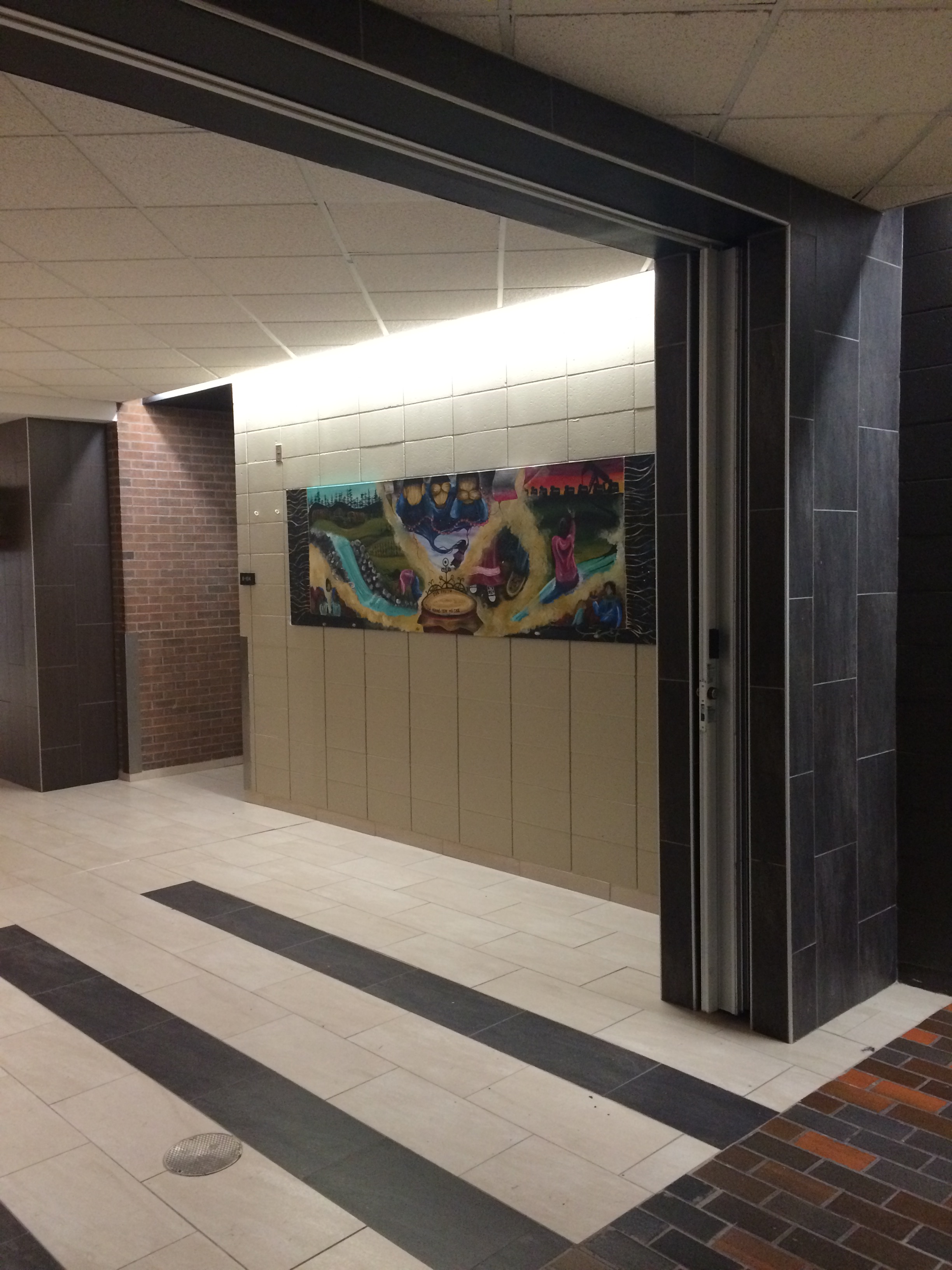
This mural now permanently resides at the Champlain College in Quebec as a conversation piece among its students. Reconciliation begins with dialogue.

IMG-9069

Mural displayed at Champlain College.